
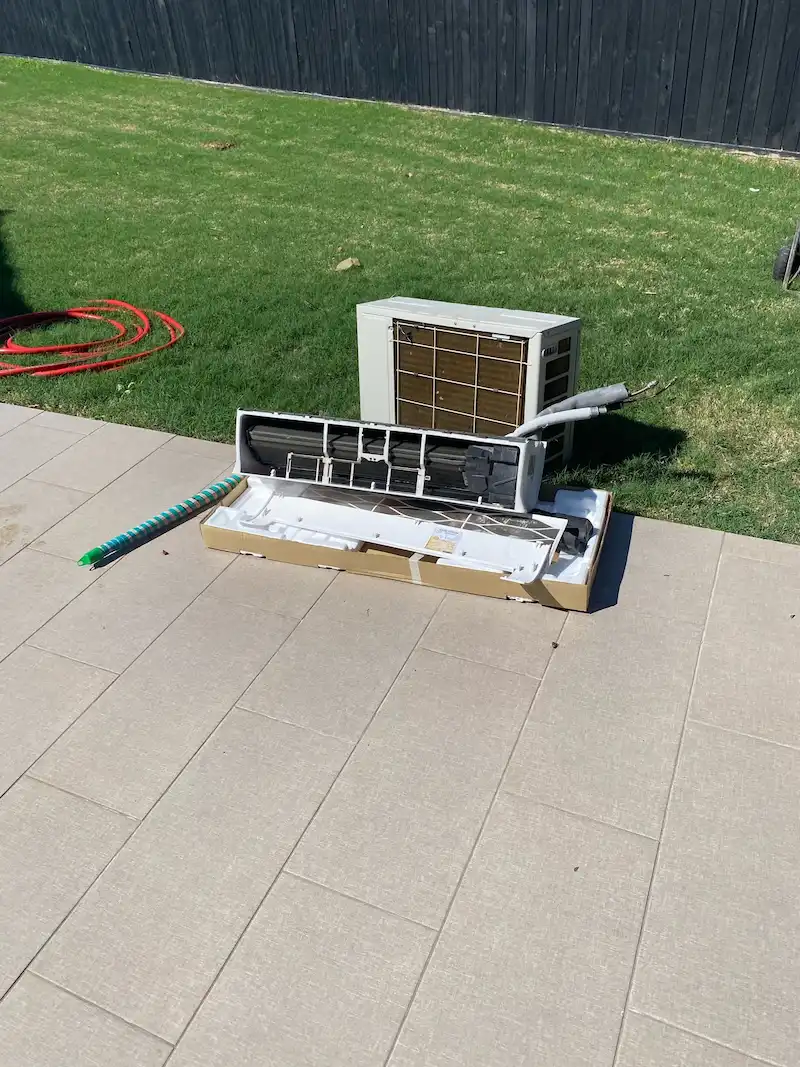
Comparing variable speed heat pump pros and cons? Steadier comfort and lower energy use sound appealing, but an upgrade may bring a higher quote, extra controls, and uncertain payback. In Texas, long cooling seasons and humid Gulf Coast weather can make sustained part-load operation valuable. Homes in Dallas–Fort Worth or West Texas also need a careful heating-capacity and backup review. Your best choice depends on the home’s load, ducts, electrical service, utility rates, existing equipment, and exact matched system—not the technology label alone.
Are Variable Speed Heat Pumps Worth It?
Variable-speed heat pumps adjust compressor output to better match a home’s load. That can reduce cycling and support steadier comfort, but upfront cost and control complexity are higher, and savings are not guaranteed. They may suit Texas homes with long cooling hours or uneven comfort if the system is correctly sized and the written quote justifies the price difference.
Variable Speed Heat Pump Pros and Cons at a Glance
A variable-speed system may improve comfort, but value depends on the home’s load, the equipment’s minimum output, and the price difference from a suitable alternative.
| Decision factor | Potential advantage | Trade-off or condition |
| Capacity control | Compressor output can adjust instead of relying only on full-on/full-off operation | Minimum output may still exceed a mild-weather load, so cycling can continue |
| Comfort | Longer, lower-output cycles may reduce temperature swings | Sizing, airflow, ducts, and controls still matter |
| Humidity | Sustained cooling may help moisture removal in the right mode | Some efficiency modes can reduce latent cooling; not automatic |
| Sound | Lower operating speed can be quieter at some conditions | Sound depends on model, size, mode, and measurement method |
| Price and service | Potential part-load benefit | Higher quote and added electronics; no verified universal price premium or failure rate |
Main advantages to consider
When the home’s load is within its operating range, a variable-speed system may reduce some on/off cycling and support steadier part-load operation, especially during long Texas cooling seasons.
Main drawbacks to compare
Expect a potentially higher quote and more model-specific controls. A universal 25–40% premium is not established; compare same-scope bids.
What Is a Variable Speed Heat Pump?
A heat pump moves heat rather than creating it by burning fuel at the indoor unit. It moves indoor heat outside for cooling and reverses the refrigerant cycle to heat the home. A variable-speed design adjusts compressor output as demand changes.
Inverter-driven compressor
Many systems use an inverter drive to change compressor-motor speed. “Inverter” is a common way to modulate output; “variable speed” describes the capability. The phrase variable speed vs inverter heat pump does not always compare separate categories. Ask what the exact indoor unit, outdoor unit, and controls do.
Readers comparing inverter heat pump pros and cons should assess the whole matched system and installation, not just the compressor label.
Compressor speed is not blower speed
The compressor moves refrigerant; the indoor blower moves air through the coil and ducts. A variable-speed blower alone does not prove compressor modulation. Ask the contractor to identify each component’s control range and how the system operates in each mode.
25–100% Capacity Modulation?
Claims of a universal 25%–100% capacity range are not supported. Minimum and maximum output vary by model, matched equipment, temperature, and operating mode. Ask for product data at relevant conditions.
Matched indoor and outdoor equipment
Split-system performance ratings apply to a specific indoor/outdoor combination, not simply to an outdoor-unit label. Ask for the exact model numbers and an AHRI certificate. Correct load calculation and equipment selection matter; oversizing can increase cycling and weaken humidity control.
For an existing home, a variable-speed unit is only one part of the retrofit. The do heat pumps work in older houses guide covers older-home fit, ducts, and electrical checks.
Pros: Efficiency, Comfort, Humidity, and Quiet
Energy efficiency at part load
When output tracks demand, a variable-capacity system may reduce cycling and some part-load losses. It will not use less electricity in every home: sizing, installation, airflow, controls, climate, thermostat settings, and backup heat all matter.
A 2014 Knoxville study found lower power use for its tested variable-speed systems than for smaller single-speed systems at like outdoor temperatures. It covered one research home and did not isolate modulation from other equipment differences; it is not a Texas savings forecast.
SEER2 and HSPF2 are standardized comparison ratings, not forecasts of a household bill. Duct leakage, thermostat use, local weather, utility rates, and auxiliary heat change actual results. Compare matched systems and request local performance estimates.
More consistent temperatures
Lower-output operation may reduce temperature swings when the home’s load fits the equipment range and ducts distribute air evenly. It cannot fix a closed-off room, a misplaced thermostat, or leaky ductwork by itself.
Humidity control in cooling mode
Near the Gulf Coast, moisture removal is a key comfort concern. Longer cooling at suitable airflow can help; one warm-humid study measured 50–52% indoor relative humidity in a variable-speed mode versus 55–60% in normal cooling. It tested one system, not every Texas installation.
Efficiency-focused settings may reduce moisture removal compared with comfort settings. Ask how airflow and controls will balance temperature and humidity; some homes also need duct work or supplemental dehumidification.
Quieter operation at some conditions
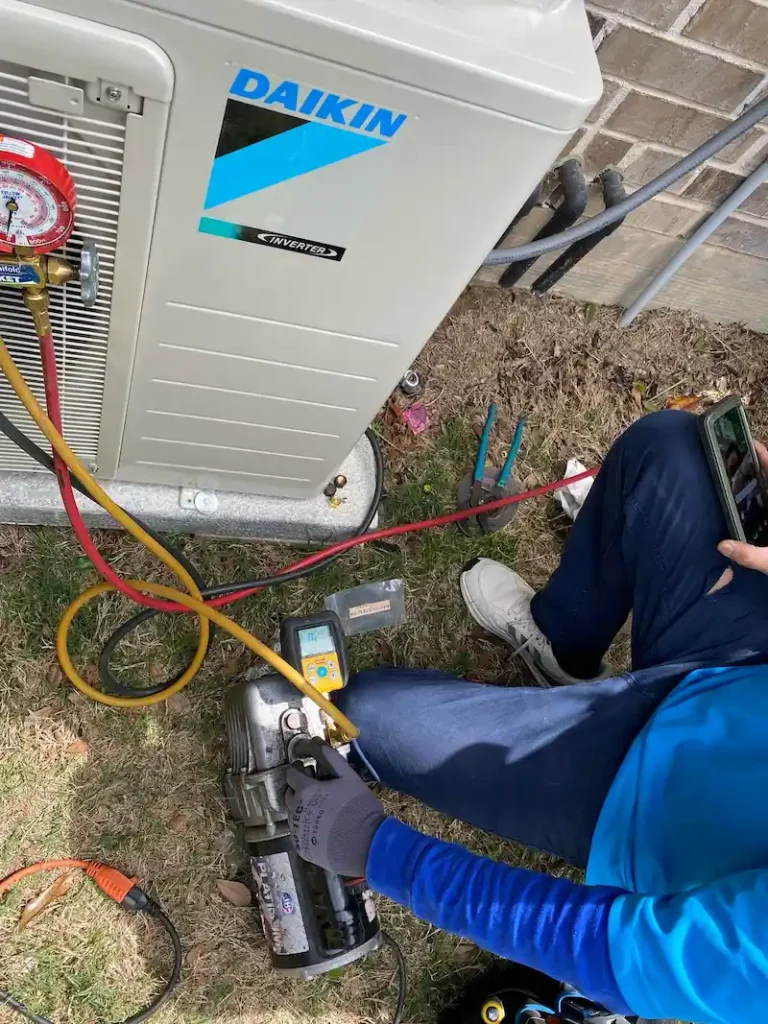
Lower compressor and fan speeds can be quieter, but “as low as 53 dB” is product-specific, not class-wide. The cited page lists 53 dB at lowest-capacity cooling; its data sheet instead says 55 dBA and gives size-specific figures of 56 or 58 dBA. The discrepancy is unresolved, so compare model, size, condition, and method.
What about “up to 23 SEER2”?
One product line advertises “up to 23 SEER2,” a model-family maximum rather than a category rating. The certified indoor/outdoor combination determines the actual rating. Ask for the AHRI certificate for the equipment in your proposal.
Does it improve indoor air quality?
No. A heat pump does not automatically ventilate a home or remove every pollutant. EPA separates source control, ventilation, and filtration; filter performance depends on efficiency, airflow, runtime, and system compatibility.
Cons: Higher Cost, Complexity, and Service
Higher upfront cost—and uncertain payback
A variable-speed option may cost more, but a universal 25–40% premium is not supported by an apples-to-apples national dataset. Guides mix different sizes, features, and scopes. Compare complete proposals for the same home.
More controls and electronics
Variable-speed systems may use more control boards, sensors, and indoor/outdoor communication. Diagnosis can be model-specific, but added electronics alone do not establish lower reliability. The research reviewed found no robust class-wide failure-rate comparison.
One commercial inverter-air-conditioner guide also flags board-level service complexity. Because it covers air conditioners and is not a representative heat-pump repair study, use it only as a prompt to ask about model-specific service—not as a repair-cost benchmark.
Repair costs are not easy to generalize
One consumer guide estimates $75–$600 for generic HVAC circuit-board work; it is not an inverter-board price or an invoice survey. Ask for the diagnosed part, labor, trip fee, and warranty coverage in writing.
For variable speed heat pump reliability, compare installation quality, maintenance, parts availability, and the actual warranty—not a blanket “better” or “worse.” Check whether labor is covered and whether local technicians can service the model.
Thermostat and air-handler compatibility
An existing thermostat or air handler may not support full modulation or backup-heat logic. Require the exact indoor/outdoor models and controller in the proposal, plus written confirmation of compatibility and what changes if equipment is reused.
Warranty is not the same as a free repair
Parts warranties may exclude labor, diagnosis, refrigerant, and service calls. Reviewed manufacturer terms also vary by model and registration. Read the actual certificate and labor contract; two “10-year warranties” may cover different items.
Variable Speed vs. Single-Stage vs. Two-Stage
Single-stage equipment generally runs at one capacity when it is on. Two-stage equipment has a lower and a higher operating level. Variable-speed equipment can adjust output across a model-specific range. Those descriptions explain control, not a guarantee that one category is best in every home.
| System type | Capacity control | Comfort potential | Typical price position | What to verify |
| Single-stage | One operating level | Basic; comfort depends on sizing and airflow | Often lower | Runtime, cycling, and humidity performance |
| Two-stage | Lower and higher operating levels | More adjustment than single-stage | Often mid-range | Exact stage capacities and control settings |
| Variable-speed | Modulates across a product-specific range | Can provide longer, lower-output operation | Often higher | Minimum output, matched components, controls, and installed premium |
Do not rank efficiency by category name alone. Compare ratings, cold-weather capacity, sound, controls, and installed cost for matched systems.
If you are comparing system stages, the Heat Pump Single Stage vs Two Stage article is a useful companion—but two-stage and variable-speed are not interchangeable terms.
Texas-Specific Considerations: Hot Summers, Mild Winters
Texas is not one HVAC climate: Gulf humidity, North Texas freezes, Central Texas station variation, and West Texas elevation or desert conditions affect loads. NWS normals describe stations, not a home’s Manual J calculation.
Houston, Dallas, Austin, and San Antonio Examples
| Area | Representative climate context | Ask the installer to check |
| Houston and Katy | Long, hot, humid cooling season; Houston IAH July/August normal mean near 85°F | Humidity controls, condensate drainage, ducts, and address-specific utility eligibility |
| Dallas–Fort Worth | Hot summers and more routine freezes than coastal Houston; about 2,825 cooling and 2,218 heating degree-days | Capacity at local design conditions and backup-heat controls |
| Austin and Round Rock | Cooling-heavy, with station-to-station freeze-day differences | Address-specific load, ducts, electrical capacity, and cold-weather output |
| San Antonio | Cooling-dominant normals with occasional freezes | Correct capacity, humidity, and backup-heat settings |
| West Texas | Lubbock’s high-plains profile differs from El Paso’s desert climate | Local design temperature, wind exposure, dust clearance, and cold-weather capacity |
A city name does not establish duct quality, electrical capacity, or price. Inspect the home and use its measured load and service address.
How Much Does a Variable Speed Heat Pump Cost in Texas?
These are planning bands, not quotes or statewide averages. Capacity, zones, matched equipment, labor, permits, ducts, electrical work, removal, and access all affect price. The ducted variable-speed band is a working budget, not a published segment average.
| Project scope | Planning range | Important limit |
| Whole-home ductless mini-split | $10,000–$20,000 | North Texas 4-zone examples run $11,000–$17,000; 5-zone examples $14,000–$22,000. National quote-derived ductless averages can be higher. |
| Ducted variable-speed heat pump | $14,000–$24,000 | Provisional installed budget; published averages do not isolate variable-speed systems. |
| Air sealing plus attic insulation | $2,000–$6,000 | Austin estimates vary by attic area, R-value, air leaks, access, and insulation removal. |
| Panel replacement or modest electrical work | $1,500–$4,000 | A full service upgrade can exceed this range if meter, conductors, grounding, or utility work are included. |
North Texas examples price a four-zone mini-split at $11,000–$17,000 and a five-zone project at $14,000–$22,000, with labor and equipment itemized. A March 2026 marketplace guide reported a $25,957 national ductless average before incentives. Different samples and scopes mean neither is a guaranteed quote.
Austin guides list attic insulation around $2,060 on average, with roughly $250–$740 for air sealing; removal and repairs add cost. A Central Texas guide puts full service upgrades at $5,000–$10,000, above a like-for-like panel replacement. New ductwork is another separate scope; one national HVAC guide lists it as a $3,500 line item, not a universal full-home price.
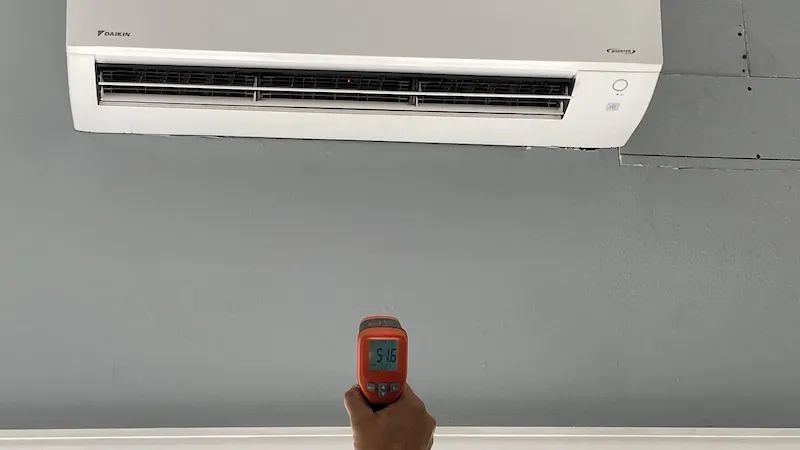
For another local starting point, read how much is a heat pump for a house. Compare the equipment, indoor unit, controls, permits, duct work, electrical work, labor, and exclusions—not only the headline price.
How Much Could You Save?
A higher rating does not guarantee a lower bill. Estimate annual use with your utility rates, local performance, auxiliary heat, and current equipment. A high summer bill may also reflect weather, duct leakage, thermostat settings, or other household loads.
Use simple payback only as a screen: extra installed price divided by estimated annual savings. A hypothetical $3,000 premium and $250 yearly savings equals 12 years before financing, service, repairs, or comfort value; it is not a forecast.
If you are evaluating the longer ownership period, the site’s how long should heat pump last guide discusses lifespan as a planning estimate, not a guarantee for an individual unit.
Will It Fix Humidity or Uneven Temperatures?
It may help if frequent cycling is the problem, but uneven rooms can also result from duct sizing or leaks, insulation, windows, layout, dampers, or thermostat location. Request measured airflow and a duct review first.
Ask for a room-by-room load, airflow and duct checks, and thermostat review. In humid areas, discuss the settings for runtime and moisture removal; duct repair or a dehumidifier may be a better or complementary fix.
Will Heat Pumps Work in Cold Climates?
Heat pumps can heat in cold weather, but capacity and efficiency change with outdoor temperature. Check model output and COP at local winter design conditions. ENERGY STAR cold-climate criteria include capacity at 5°F, but do not prove one unit meets every home’s load.
In Texas, many homes may not need the same backup strategy. A proposal might use electric resistance backup or a compatible gas furnace in a dual-fuel arrangement. Ask for the balance point, switchover settings, defrost operation, and estimated backup use. The will heat pumps work in cold climates guide covers cold-weather capacity in more detail.
Maintenance, Repairs, and Warranty
Variable speed does not eliminate maintenance. Follow filter and coil-care instructions, keep airflow clear, and seek service when performance changes. A technician can check airflow, refrigerant charge, drains, electrical connections, and controls; blocked airflow or poor installation can undermine performance.
Check parts and labor coverage, registration, service availability, and diagnostic charges. Performance field studies are not failure-rate surveys; evidence does not show that variable-speed systems fail more or less often as a class. Assess the exact model, warranty, installer, and local parts support.
If you notice a persistent burning or electrical odor, treat it as a safety issue rather than a sign that a new heat pump is needed. The Heater Smell Like It’s Burning article gives safety-oriented next steps.
Rebates and Financing in Texas (2027)
Do not budget an unconfirmed 2027 rebate. As of November 19, 2026, IRS guidance limited the federal home-improvement credit to qualifying work placed in service through December 31, 2025. Texas HOMES and HEAR rebates were listed as unavailable, pending approval, with no launch date on the state page updated August 21, 2026. Recheck before purchase.
| Program or area | Status shown in the source review | What to do |
| Federal 25C home-improvement credit | IRS information covered qualifying improvements only through Dec. 31, 2025 | Do not count a 2027 credit unless IRS publishes updated eligibility |
| Texas HOMES and HEAR | State page said not yet available; no launch date verified | Check the Texas Comptroller/SECO page for a formal launch |
| CenterPoint Houston Electric | HVAC incentives listed from $200; no 2027 guarantee | Confirm account area, equipment, contractor, and funding |
| Austin Energy | Heat-pump tiers listed at $650, $750, and $950 for eligible customers | Confirm service account, equipment tier, and contractor rules |
| CPS Energy, San Antonio | Program Year 5 application ran through Jan. 31, 2027; funding subject to depletion | Check current funds and application timing before work starts |
| Oncor | 2026 funds shown as exhausted; customers directed to check for January 2027 updates | Verify whether a new program has opened |
These are snapshots, not promised awards. Eligibility depends on account, address, contractor, equipment, timing, and funds. CenterPoint and Oncor operate delivery networks; retail electricity plans are separate. Confirm written rules before subtracting a rebate from your budget.
If financing, compare APR, fees, term, deferred-interest conditions, and total repayment—not only the monthly amount.
How to Get an Accurate Heat Pump Quote
Request a Manual J or equivalent load calculation, exact indoor/outdoor model numbers, an AHRI match, and heating capacity at local winter conditions. Ask whether ducts and electrical service are suitable, which controls must change, and how backup heat operates.
Compare itemized quotes with the same equipment scope. Include labor, permits, disposal, startup, controls, duct and electrical work, warranty, exclusions, and optional upgrades. Ask what is required versus optional; a lower bid may omit work another includes.
If the quoted upgrade premium is not clear, request a second option with two-stage equipment and the same installation scope. That makes the comfort and price trade-off easier to evaluate without assuming the highest tier is automatically best. For existing service availability, check 24sevenac’s service-area page or confirm by address.
Who Should Consider a Variable-Speed Heat Pump?
Consider it when gradual capacity adjustment addresses a documented comfort need, cooling hours are long, and the price difference is reasonable for your expected time in the home. Confirm the matched system meets the load without excessive backup heat.
A simpler system may be better value when comfort is already good, the premium is large, expected gains are small, or local service is limited. “Are variable speed heat pumps worth it?” depends on bids, rates, expected use, warranty, and priorities.
FAQ: Variable Speed Heat Pump Pros and Cons
Is a variable speed heat pump worth it?
It can be worthwhile when gradual capacity changes solve a real comfort issue and the price difference is reasonable. Compare matched bids, utility rates, warranty, and expected time in the home; it is not automatically the best value.
Why is my electric bill so high with a heat pump?
Weather, rates, thermostat settings, duct leaks, airflow, auxiliary resistance heat, or equipment faults can raise bills. Check backup-heat use and compare the same season year over year. Have a technician test airflow and controls before blaming the system category.
Is variable speed better than 2 stage?
Not always. Variable speed offers a broader model-specific output range; two-stage equipment has fewer levels and may cost less. Choose based on home load, comfort goals, matched equipment, service access, and installed price.
What is the biggest disadvantage of a variable-speed heat pump?
A higher quote and more complex controls are common trade-offs, but there is no verified universal premium or class-wide failure rate. Request same-scope pricing, the model’s warranty, and local service confirmation.
Does a variable-speed heat pump run all the time?
It may run longer at low output during mild weather, but not necessarily continuously. If home demand falls below minimum capacity, the system may cycle between minimum operation and off. Sizing and controls affect runtime.
Does it need a special thermostat?
Some systems need a communicating control; others support compatible alternatives. Ask for the exact controller and written confirmation that it supports the indoor/outdoor equipment and backup-heat functions.
Will it reduce humidity in a Texas home?
It may help when runtime and airflow support moisture removal, but sizing, coil conditions, ducts, controls, and moisture loads matter. Ask about latent cooling and whether duct work or supplemental dehumidification is needed.
Are variable-speed heat pumps more expensive to repair?
Specialized parts may be involved, but comparative repair data is limited. A generic board estimate is not an inverter-board quote. Compare the exact model’s parts/labor warranty, diagnostic fee, repair estimate, and parts availability.
Is a variable-speed blower the same as a variable-speed compressor?
No. The blower moves indoor air; the compressor controls refrigerant flow and capacity. They may coordinate, but one being variable-speed does not prove the other is. Check both model specifications.
Can I keep my existing air handler?
Sometimes, if the manufacturer approves the match and it meets the intended performance. Confirm model compatibility, AHRI listing, airflow, controls, and warranty effect; an incompatible indoor unit can limit efficiency or functions.
How do I compare installation quotes?
Compare exact models, matched ratings, controls, ducts, electrical work, permits, labor, startup, warranty, and exclusions. Ask each contractor to explain the load calculation and cold-weather capacity, not just the headline rating.
Get an Accurate Variable Speed Heat Pump Quote for Your Texas Home
Ask 24sevenac to compare suitable heat-pump options for your home, comfort goals, and budget. Request a written quote and ask whether it includes a load calculation and duct/electrical review. Confirm the equipment, controls, installation scope, warranty, upgrades, and service availability for your address; the published heating service page focuses on Houston, Katy, and nearby communities.


