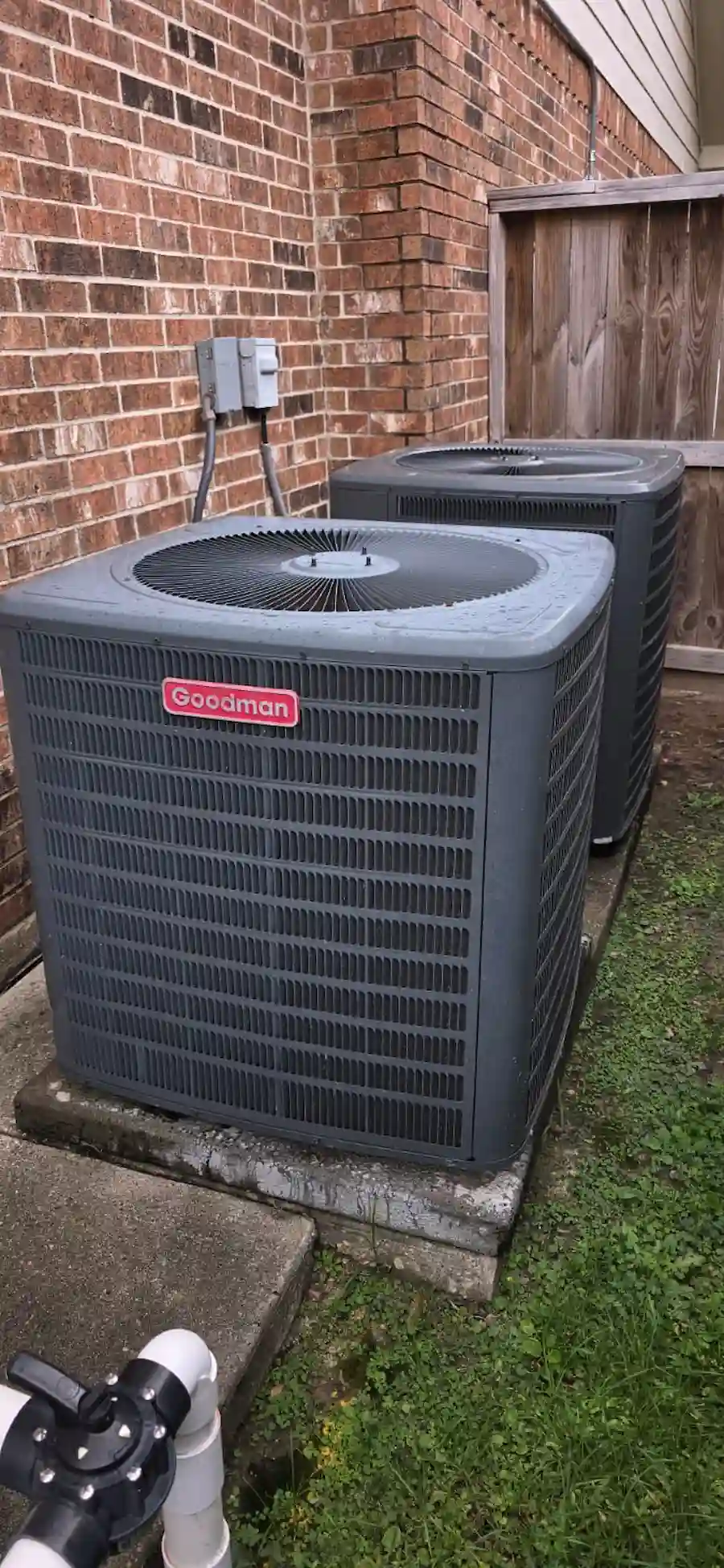
Do heat pumps work in older houses? Yes—age alone does not rule out a retrofit. The right system depends on the home’s heating and cooling loads, air leakage, insulation, ducts, and electrical service. Texas homeowners can consider a ducted air-source system, ductless mini-splits, or a heat pump paired with an existing furnace. A home-specific assessment matters more than the year it was built.
Do Heat Pumps Work in Older Houses?
Yes, heat pumps can work well in older houses when selected and installed for the building. Check the home’s heat loss, air sealing, insulation, duct condition, and electrical capacity. In Texas, ducted systems, ductless mini-splits, and dual-fuel setups may all fit. A load calculation and model-specific performance data help determine which option is right.
What to confirm first
Ask for a heating and cooling load calculation, an assessment of ducts and electrical service, and a written explanation of any recommended insulation or air-sealing work. Do not assume every older home needs new ducts, a larger electrical panel, or a complete weatherization project before installing a heat pump.
Why Age Is Not the Main Factor
An older house is not automatically too drafty or incompatible with a heat pump. Age can signal that insulation, windows, ducts, or electrical equipment deserve closer inspection, but the system responds to the home’s actual heat gain and heat loss—not its construction date. A well-designed heat pump can heat and cool an older Texas home; a newer house can still be uncomfortable if equipment is oversized or ducts leak.
Heat loss matters more than age
In winter, heat escapes through ceilings, walls, floors, windows, and air leaks. In summer, outdoor heat, sunlight, humidity, and infiltration affect the cooling load. Two homes built in the same decade can need very different equipment because one has been air-sealed and insulated while the other has not.
A heat pump moves heat rather than generating it and can also cool the home. Efficiency varies with outdoor temperature, equipment, controls, and installation.
Modern heat pumps can serve drafty homes—with the right design
Draftiness increases heating and cooling load; it is not an automatic disqualifier. Variable-speed models adjust output, but a cold-climate label does not guarantee capacity for every home. ENERGY STAR tests certified models at 5°F; check capacity at local design temperatures and plan backup heat if needed.
Ductless options bypass difficult duct routes
Where ducts are absent or hard to add, mini-splits serve one or more zones without a central duct network. They are not automatic whole-house solutions: unit placement and room layout still matter.
Proper sizing beats square-foot rules
Do not choose capacity from floor area alone or simply copy the old unit’s tonnage. ACCA Manual J is the nationally recognized residential load-calculation standard. The contractor should account for location, construction, insulation, windows, leakage, room orientation, and ducts, then select equipment that matches the calculated loads and manufacturer data.
Ask what the load calculation assumes
For an older house, ask whether the calculation reflects existing insulation and leakage or planned improvements. If the home will be air-sealed first, the installer should explain how that changes the estimated load and equipment choice. If the system has failed in an emergency, safe replacement need not wait for a full renovation—but the assumptions should be documented.
What Actually Determines Heat Pump Success
A successful retrofit depends on the whole system, not only the outdoor unit. Before comparing models, gather recent energy bills, note uncomfortable rooms, and identify the current heating fuel, duct layout, and likely electrical constraints. Those details help the contractor explain why one configuration fits better than another.
1. Manual J load calculation
Manual J estimates peak heating and cooling loads. ENERGY STAR recommends it over square-foot guesses, and PNNL notes leakage and insulation affect the result. Ask for the calculation or a summary of its inputs.
Size for both seasons
A heat pump serves both winter heating and summer cooling, so consider both loads. In Texas, summer capacity and humidity management matter alongside winter heating. Request the model number and performance data at outdoor temperatures relevant to your location—not just nominal tonnage.
2. Air sealing and insulation
Air sealing and insulation can reduce drafts and the load the system must serve. DOE’s national analysis estimated that envelope upgrades could reduce heat-pump purchase and installation costs by up to $3,700 for homes built before 1970 in cold climates. That is not a Texas savings guarantee, but it shows why insulation can affect system sizing and project cost.
3. Ductwork condition
Existing ducts might be reusable, but size, airflow, sealing, insulation, and balance should be checked. A heat pump may need different airflow from an older furnace or air conditioner. Have accessible ducts inspected and tested before assuming they are ready for new equipment.
4. Electrical capacity
The panel’s amp rating alone does not determine whether it can support the project. A qualified electrician should review service load, breaker spaces, proposed equipment, auxiliary heat, other major loads, and local code. A 100-amp service may work for one house and not another. Do not authorize a panel upgrade—or assume none is needed—without a load assessment.
5. Climate and backup heat
A heat pump may meet most heating needs in mild-winter areas. A colder location, draftier house, or desire for redundancy may call for electric resistance backup, dual fuel, or another plan. The changeover point should fit the house and equipment; no single temperature applies throughout Texas.
For compressor-stage differences, see Heat Pump Single Stage vs Two Stage.
Air Sealing and Insulation: The First Step
A professional home-energy assessment can examine utility bills, insulation, air leakage, ducts, and HVAC equipment. A blower-door test measures whole-house airtightness and helps locate leaks when combined with diagnostic tools. The resulting report can prioritize improvements instead of recommending work by guesswork.
Air sealing: close the right gaps
Common attic-floor leaks occur around plumbing and wiring penetrations, open chases, attic hatches, recessed fixtures, and top plates. Weatherstripping can help at suitable doors and windows. Larger openings may need blocking and an appropriate seal. DOE recommends sealing attic-floor penetrations before adding insulation.
If a furnace or water heater is in or near the work area, ask whether combustion-safety and ventilation checks are needed after tightening the building envelope. Do not apply foam near hot flues or electrical equipment unless the product and clearances allow it.
Check questionable wiring and insulation
Older homes may contain knob-and-tube wiring or vermiculite insulation that could contain asbestos. Do not cover questionable wiring or disturb suspected vermiculite; have a qualified electrician or hazardous-materials professional assess it first.
Attic insulation: use the home’s climate zone
Texas does not have one attic R-value for every city. ENERGY STAR lists R-49 for an uninsulated attic in Zones 2–3 and R-60 in Zone 4; when 3–4 inches already exist, recommended additions are R-38 in Zones 2–3 and R-49 in Zone 4. Verify the county, code, and attic assembly before selecting a target.
Insulation does not replace sealing large air gaps. Proper installation also needs attention to moisture, ventilation baffles, ducts, and safe clearances. Ask the contractor to document the existing and final R-value.
Basement and crawlspace considerations
Some Texas houses have slabs; others have raised floors, crawlspaces, or basements. The right treatment depends on moisture, ventilation, and whether the space is inside the home’s thermal boundary. Address water intrusion before covering surfaces with insulation.
Ductwork: Reuse, Repair, or Go Ductless?
Old ducts can be serviceable, but appearance alone does not show whether they can carry the new system’s airflow. Check accessible sections for disconnected joints, crushed flex duct, damaged insulation, leaks, and poor returns. The contractor can measure airflow and static pressure against the proposed equipment’s requirements.
Existing ducts in decent shape
If ducts are properly sized, sealed, insulated where needed, and balanced, a ducted heat pump may use them. ENERGY STAR notes that central heat pumps can connect to existing forced-air ducts. Ask whether the bid includes testing or merely assumes the ducts are reusable.
Leaky or undersized ducts
Leaky ducts can waste conditioned air and create room-to-room comfort differences. If the duct system cannot deliver the heat pump’s required airflow, the unit may be noisy or perform poorly. Ask whether sealing, insulation, balancing, resizing, or replacement is justified by test results—and whether the quote includes a post-repair check.
No ductwork: understand the existing heat source
Some older U.S. houses use boilers, radiators, or electric baseboards. A standard air-to-air mini-split does not connect to a radiator loop; it heats and cools room air directly. The homeowner may retain a boiler or evaluate a designed ductless layout. Avoid confusing common U.S. mini-splits with air-to-water systems often discussed in European retrofit guidance.
Test before abandoning ducts
A few accessible leaks or balancing problems may be repairable. Extensive damage, poor airflow, or inaccessible runs may make reuse unwise. Compare repair, partial replacement, full replacement, and ductless zones before choosing on equipment price alone.
Ductless Mini-Splits: The Best Option for Many Old Homes
A mini-split can be a practical option where ducts are absent, deteriorated, or difficult to route through finished rooms. An outdoor unit connects to one or more indoor heads, each serving a zone. ENERGY STAR identifies mini-splits as an option for homes without ducts and additions where duct installation is difficult.
Single-zone versus multi-zone
A single-zone unit can serve an addition, sunroom, or frequently used room. Multiple indoor units can cover more rooms, but each head needs suitable location and capacity. The outdoor unit’s total and minimum capacity must also suit the zones it serves.
Placement, zoning, and ventilation
Wall, floor, or ceiling units fit different rooms. In an older home, plaster, trim, windows, and built-ins affect line routing and placement. Ask where refrigerant lines and condensate drains will run and what finish work is included.
Zoning does not guarantee whole-house comfort. A mini-split does not automatically deliver fresh air, and a unit in one room may not condition a distant room behind a closed door. Have loads calculated by zone and discuss ventilation and air movement.
When ducts may be better
If existing ducts are sound and correctly sized, a central heat pump may deliver more even whole-house distribution with fewer visible indoor units. Compare duct repairs with the number of mini-split heads and the homeowner’s preferences for appearance, controls, and maintenance.
Electrical Panel: Will It Handle a Heat Pump?
A heat pump generally needs dedicated electrical circuits, but that does not automatically mean the service panel must be enlarged. The answer depends on the panel rating, household loads, available spaces, equipment nameplate, backup heat, and code. Have an electrician assess the system before pricing a panel upgrade.
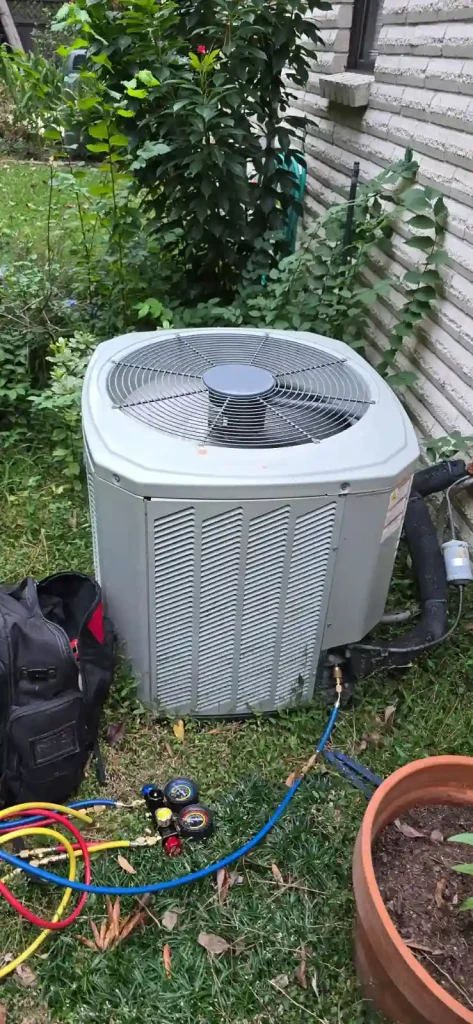
100-amp versus 200-amp service
A 100-amp panel may be sufficient in one home but not another; 200 amps do not guarantee readiness. Cooking, water heating, EV charging, and resistance backup affect the calculation. Ask for a documented load assessment.
Panel capacity, breaker space, and upgrades
A panel can have calculated capacity but lack breaker space, or require service work because total load is too high. A subpanel or load-management device may help where allowed, but cannot increase service amperage or waive code.
Preliminary panel cost
Use $1,500–$4,000 as an initial project allowance. Published estimates for a 200-amp panel upgrade often fall around $1,300–$3,000, while service-line, meter, rewiring, permits, or utility work can increase the price. An upgrade is not automatically required for every heat pump.
Backup Heat and Dual-Fuel Options
Backup heat can help when a heat pump cannot meet the full load or when the owner wants another heat source. Choose it with the equipment and electrical service—not by default.
Electric resistance backup
Electric heat strips can supply heat during very cold conditions or defrost, but they draw substantially more electricity than heat-pump operation. Ask for the strip capacity, circuit requirements, and thermostat logic. Large temperature setbacks may trigger auxiliary heat more often, so follow the equipment maker’s guidance.
Dual-fuel with an existing furnace
Dual fuel pairs an air-source heat pump with a gas furnace. The heat pump handles milder weather, and the furnace takes over at a configured changeover point. This can preserve a serviceable furnace, but the controls and sequence must be designed for the equipment and house.
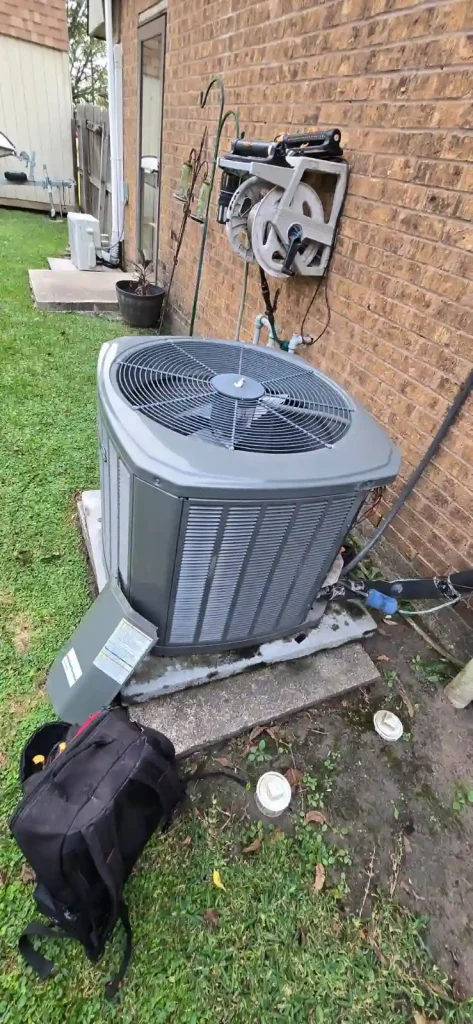
When is backup heat needed in Texas?
A properly selected system may cover much of the heating season in many Texas locations, but northern and western locations can face different winter conditions than the Gulf Coast. Ask for heat-pump capacity at local design temperatures and compare it with the home’s load. There is no universal switchover temperature.
Do heat pumps work in sub-zero temperatures?
Some models continue operating below 0°F, but capacity and efficiency vary by model and temperature. “Can run” does not mean “can meet the full house load.” Check expanded performance data and plan backup heat if needed. A certification test point does not guarantee identical performance in every home.
Texas-Specific Considerations: Hot Summers, Mild Winters
Cooling, humidity, and local weather
Texas heat-pump design must account for summer cooling and humidity as well as heating. Proper sizing, airflow, and condensate drainage matter during long cooling periods. Winter design conditions and utility rules vary, so use the property’s location and service address rather than a statewide assumption.
Houston, Dallas, Austin, and San Antonio Examples
| Area | Retrofit considerations | Utility program to verify |
| Houston and Katy | Humidity control, long cooling season, attic ducts, condensate drainage, and outdoor-unit placement. | CenterPoint’s Houston Electric program currently lists HVAC incentives starting at $200 for eligible heat pumps and mini-splits. |
| Dallas–Fort Worth | Balance summer cooling with colder design conditions; confirm winter capacity, backup plan, and duct airflow. | Oncor lists HVAC and insulation programs when annual efficiency programs are open; check the current program year. |
| Austin and Round Rock | Confirm home and equipment eligibility, permits, contractor participation, and Manual J sizing. | Austin Energy currently posts heat-pump tiers of $650, $750, and $950 for qualifying replacements. |
| San Antonio | Check existing equipment and replacement eligibility, local design conditions, and system scope. | CPS Energy currently lists heat-pump rebates of $90–$310 per cooling ton; verify the current application year. |
| West Texas | Consider dust, wind exposure, and local winter loads; size by the actual site rather than a statewide assumption. | Confirm the utility territory and program for the service address. |
Confirm utility incentives by address
These are examples, not city-specific performance guarantees or fixed 2027 offers. Utility boundaries and program rules can change.
How Much Does a Heat Pump Cost in an Older Home?
Price depends on zones, capacity, ducts, electrical work, access, permits, and finish repairs. Treat the table as an early guide, not a Texas average or quote. Cost references cover different scopes, so compare itemized local bids.
| Retrofit item | Illustrative planning range | What changes the price |
| Whole-home ductless mini-split, typically 4–5 zones | About $10,000–$20,000 | Number of heads, capacity, line routing, circuits, labor |
| Ducted air-source heat pump | $8,000–$15,000 for a straightforward replacement; $14,000–$24,000 for a cold-climate or complex retrofit | Equipment, ducts, air handler, backup heat, service upgrades |
| Air sealing plus attic insulation | About $2,000–$6,000; attic insulation alone often costs less | Attic area, starting R-value, access, removal, repairs |
| Electrical panel upgrade | Most often $1,300–$3,000; broad range $800–$4,000 | Panel versus service work, wiring, permits, utility requirements |
Rewiring America’s national model, based on installation data through March 2024, estimates $17,000–$23,000 (median $19,500) for a whole-home heat pump in a 1,500–2,500-square-foot home. It adjusts for inflation and local costs; it is not a 2027 Texas quote.
What a retrofit quote should include
Request model numbers, capacity, efficiency ratings, Manual J documentation, and a duct inspection summary. The written scope should say whether the air handler, thermostat, backup heat, line set, drain, circuit, permits, removal, and startup testing are included. For insulation, ask for current and target R-values and specific air-sealing locations.
Compare the whole project
A higher bid may include duct repairs, electrical work, permits, or commissioning absent from a lower one. Ask at least two or three contractors to price the same scope and explain different sizing assumptions before comparing financing.
If you are searching how much is a heat pump for a house, specify which rooms need heating and cooling, whether ducts exist, and what electrical or envelope work is planned. A one-room mini-split and a whole-house retrofit are not comparable projects.
Rebates and Financing in Texas (2027)
Rebates change by program, utility, equipment, and installation date. Texas SECO’s latest status page, updated August 21, 2026, says HOMES and HEAR rebates are not currently available and remain in planning and design while the state awaits federal approval. The listed maximums—up to $8,000 for HOMES and up to $14,000 per household for HEAR—are future program ceilings, not money a homeowner can claim now. Recheck the official page before publishing or installing in 2027.
Federal tax credit status
The IRS currently says Section 25C applies to qualifying improvements made through December 31, 2025. Do not assume a 2027 heat-pump installation qualifies for that federal credit unless the law changes. For work placed in service in an earlier tax year, verify that year’s rules with the IRS or a tax professional.
Local utility rebates
Austin Energy currently lists heat-pump rebates of $650, $750, or $950 by tier, subject to service-area, equipment-age, replacement, contractor, permit, sizing, and application rules. CenterPoint, Oncor, and CPS Energy also publish local efficiency programs with changing conditions. Confirm your utility account, contractor, model, and program year before subtracting a rebate from the budget.
Financing
A contractor plan, personal loan, or home-equity product can spread payments, but financing does not reduce the purchase price. Compare APR, fees, term, total repayment, promotional-rate conditions, and any lien. Ask for the cash price and financed total in writing. Check low-income weatherization or future state programs, but confirm they are accepting applications before work begins.
Common Mistakes to Avoid
A.Replacing by old tonnage
The prior system may have been oversized, or the home may have changed. Request a load calculation and a reasoned equipment selection instead of copying the old capacity.
If this research began with an unusual heater odor, read Heater Smell Like It’s Burning. An odor needs diagnosis; by itself, it does not prove the system must be replaced.
B. How long do heat pumps last?
Lifespan varies with model, installation, climate, and maintenance. See How Long Do Heat Pumps Last for a homeowner overview; consider age alongside repair history.
C. Assuming all ducts are bad—or all are fine
Test accessible ducts for airflow, leakage, insulation, and balance. Repair where practical; replace or abandon them only when inspection supports that choice.
D. Insulating without sealing or checking safety
Seal attic leaks before adding insulation. Preserve ventilation paths and check combustion safety when fuel-burning equipment is affected. Do not bury questionable wiring or disturb suspected asbestos-containing insulation.
E. Treating every panel upgrade as mandatory
Some homes need service work; others may pass a load calculation or use code-compliant load management. Have an electrician determine which applies.
F. Assuming a rebate is guaranteed
A program webpage or old sales flyer may be outdated. Verify with the utility, Texas SECO, or IRS. Do not budget a 2027 project around the expired Section 25C credit or unopened Texas rebates.
Get an Accurate Heat Pump Quote for Your Older Texas Home
Not sure if a heat pump will work in your older home? Schedule a free consultation with 24sevenac in Houston, Katy, Sugar Land, Pearland, Austin, Dallas–Fort Worth, or San Antonio. We’ll perform a load calculation, inspect your ductwork and electrical, and provide a transparent quote with all costs included.
FAQ: Heat Pumps in Older Houses
Do heat pumps work in older houses?
Yes. Older homes can use ducted heat pumps, mini-splits, or dual fuel when equipment matches the home’s load. Check insulation, ducts, electrical service, and local winter conditions; age alone does not decide compatibility.
Will a heat pump work in an old house without ducts?
Often. A ductless mini-split can heat and cool rooms without a central duct network. Ask for room-by-room sizing, suitable head locations, and a ventilation plan.
Do heat pumps work in sub-zero temperatures?
Some models operate below 0°F, but output and efficiency vary. If you’re asking “do heat pumps work in sub zero temperatures,” check performance at local design temperatures and plan backup heat if needed.
Do I need to insulate before installing a heat pump?
Not always. If the old system has failed, safe replacement may be urgent. But sealing attic leaks and improving insulation can reduce drafts and the load the equipment must meet. Ask that planned work be reflected in the load calculation.
Will I need a 200-amp panel?
Not necessarily. It depends on existing loads, equipment, backup heat, breaker space, and code. Ask an electrician for a load calculation before planning an upgrade.
Are mini-splits the best heat pumps for old homes?
They suit homes without usable ducts; a central unit may fit better when ducts are sound and sized correctly. Compare layout, comfort, and scope.
Book a Heat Pump Consultation With 24sevenac
Contact the service team
Homeowners in Houston, Katy, and nearby areas can contact 24sevenac’s heating service to ask about an evaluation of an existing central heat pump, ductless mini-split, or hybrid system. The published page lists diagnostic and repair services; confirm directly whether an installation consultation is available. book through the service page.