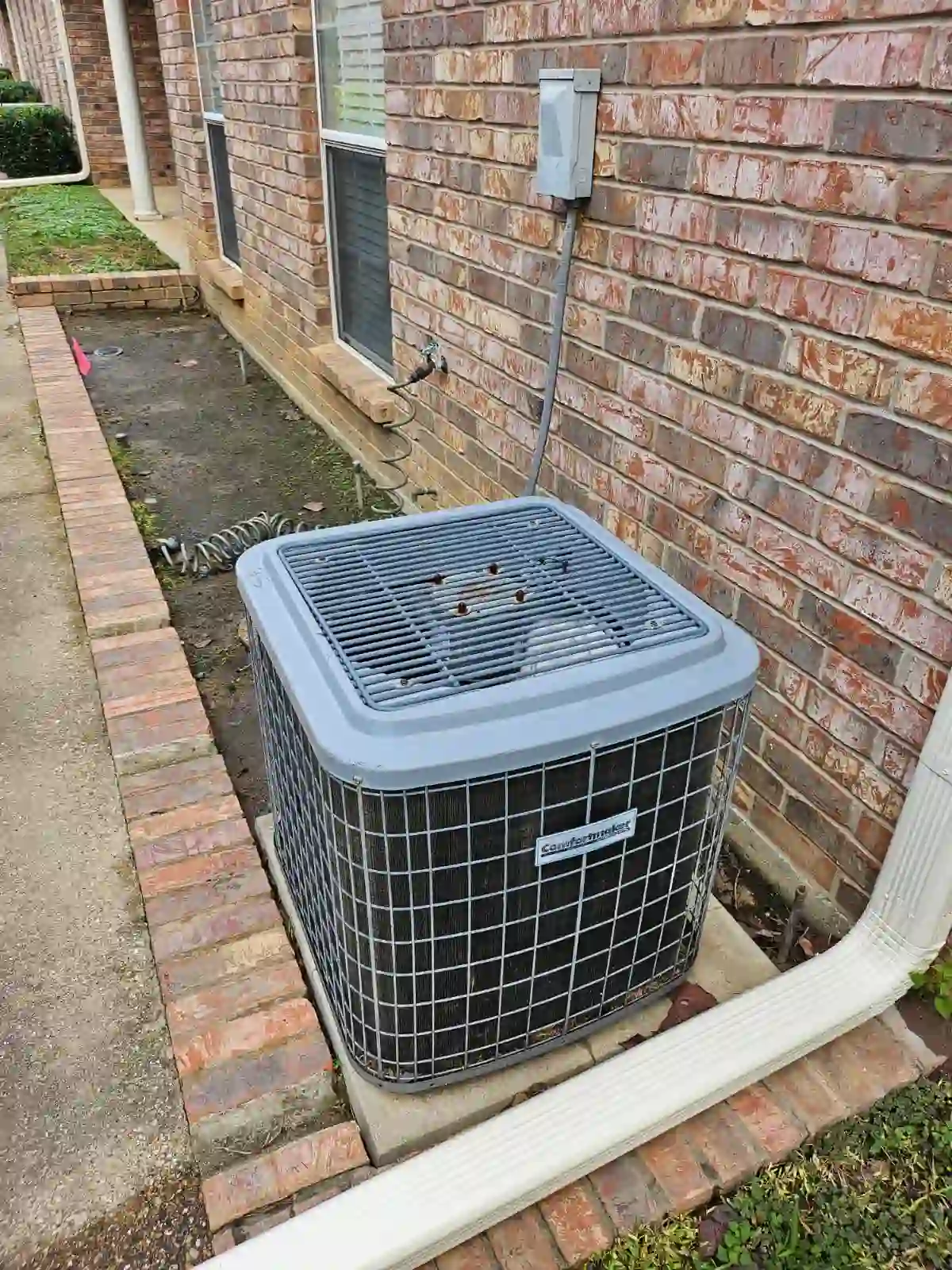
How long should heat pump last? Most U.S. homeowners can plan around 10–15 years for a conventional air-source system, though installation, maintenance, airflow, climate, and runtime affect the result. Texas has no reliable statewide lifespan figure: a Gulf Coast home and a West Texas home face different humidity, dust, and cooling demand. This guide explains when to repair, when to replace, and how to request an accurate quote. Actual condition matters. For a decision, separate equipment age from the quality of its installation.
How Long Should Heat Pump Last?
A conventional air-source heat pump is often planned around 10–15 years, though a well-installed and maintained system may last longer. Ductless estimates vary, and geothermal systems distinguish indoor equipment from the buried loop. In Texas, use condition and repair history—not age alone—to decide whether to repair or replace.
What the number does—and does not—mean
A lifespan estimate is a planning range, not a failure date. DOE uses 15 years for residential air-source heat pumps in lifecycle-cost calculations; this is not a Texas field-survival study.
If you are asking how long will a heat pump last, check its type, installation date, maintenance, comfort, and repair history. Those facts are more useful than a generic estimate. A system’s warranty period is not the same as its expected service life, and neither one guarantees that a unit will operate without repairs. Look for the date of installation, not only the home’s purchase date.
Heat Pump Lifespan by System Type
The ranges below are planning estimates, not guaranteed replacement dates. Some are based on federal lifecycle assumptions or broad consumer guidance rather than Texas field data.
| System type | Practical planning range | Best fit | Important limitation |
| Air-source heat pump | About 10–15 years | Most ducted homes | DOE’s 15-year figure is a lifecycle assumption, not a Texas survival average |
| Ductless mini-split | Broad estimates vary; one manufacturer guide gives 10–30 years | Additions, room-by-room zoning, homes without ducts | Wide range; not a federal standard |
| Geothermal heat-pump equipment | 20+ years in DOE guidance | Ground-source systems | Indoor equipment differs from the loop |
| Geothermal ground loop | About 25–50+ years | Ground-source systems | Buried loop may outlast indoor equipment |
| Dual-fuel system | Depends on both components | Homes retaining a furnace as backup | The heat pump and furnace may reach end of life at different times |
DOE uses a 15-year service-life assumption for residential air-source equipment. Its geothermal guide estimates 20+ years for indoor equipment and 25–50 years for the ground loop; a state energy guide gives similar but not identical ranges. Keep those component lifespans separate.
Air-source heat pumps
A ducted air-source heat pump handles heating and cooling and is exposed to weather, debris, coil fouling, electrical conditions, and installation quality. Correct sizing and clean airflow support reliable operation. The 10–15-year estimate is not a cutoff: a 12-year-old system with modest repair needs may be a better choice than a younger unit with recurring major failures. Check whether the indoor air handler and outdoor unit were installed together; mismatched components can complicate service, efficiency, and warranty coverage.
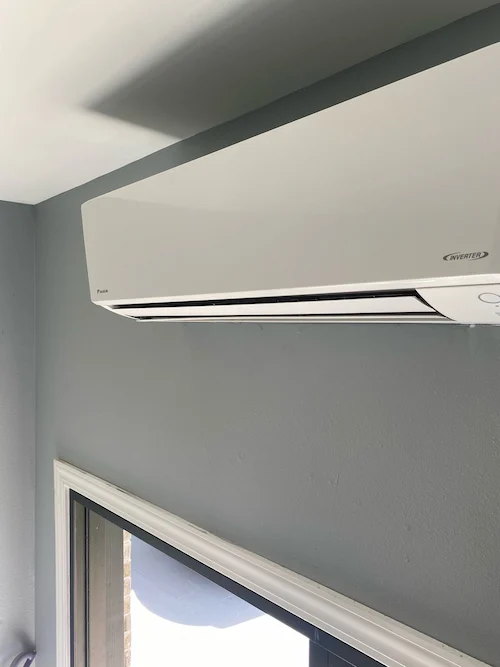
Ductless mini-splits
Ductless mini-splits avoid central duct leakage and can serve individual rooms. Lifespan depends on installation, drainage, filter care, operating hours, and both indoor and outdoor components. One manufacturer guide reports a broad 10–30-year range; do not treat its high end as a promise. Compare room coverage, head placement, filter access, and service needs. A single head may not condition a whole home.
Geothermal systems
Geothermal systems exchange heat with the ground. The loop may outlast indoor equipment and remain usable if designed and installed correctly. At replacement, assess the indoor unit separately from the loop, pumps, controls, and distribution system.
Dual-fuel systems
Dual fuel combines a heat pump with a furnace, so each has its own service life. The furnace may outlast the heat pump or vice versa. Ask whether existing backup equipment, controls, ducts, and electrical service can be safely reused before replacing both systems. A technician should also confirm that the switchover controls are configured for the equipment and local operating conditions.
What Actually Determines Heat Pump Lifespan
- System quality
Equipment design and parts availability matter, but they cannot compensate for poor installation. Compare model numbers, warranty terms, serviceability, efficiency, and tested performance; do not choose by tonnage or a promotional rating alone. Ask how replacement parts are sourced and whether a local technician can service the system. A reliable service network can reduce downtime even though it cannot prevent every component failure.
- Installation and sizing
Incorrect sizing can cause short cycling, weak humidity control, long runtimes, or poor comfort. Ask for a documented heating and cooling load calculation that includes insulation, windows, air leakage, ducts, and local design conditions. Clarify whether it assumes planned envelope improvements.
- Climate
Climate changes operating conditions, but the evidence reviewed does not establish a Texas-specific lifespan penalty. Long cooling seasons, humidity, dust, drainage, and airflow create maintenance demands; they do not prove a fixed shorter life for any city.
- Maintenance
Maintenance protects airflow and helps uncover drainage, electrical, coil, and control problems. ENERGY STAR recommends annual pre-season checkups—cooling in spring and heating in fall—and monthly filter inspection, cleaning, or replacement. It cannot prevent every failure.
- Usage hours
Identical systems can accumulate different operating hours because of weather, thermostat settings, insulation, and occupancy. Short cycling may also indicate a fault. If a system runs unusually often, check ducts, airflow, refrigerant, thermostat placement, air leakage, and sizing—not age alone. Keep a simple log of runtime changes, unusual noises, icing, and service visits. Patterns can help a technician distinguish normal seasonal use from a developing problem.
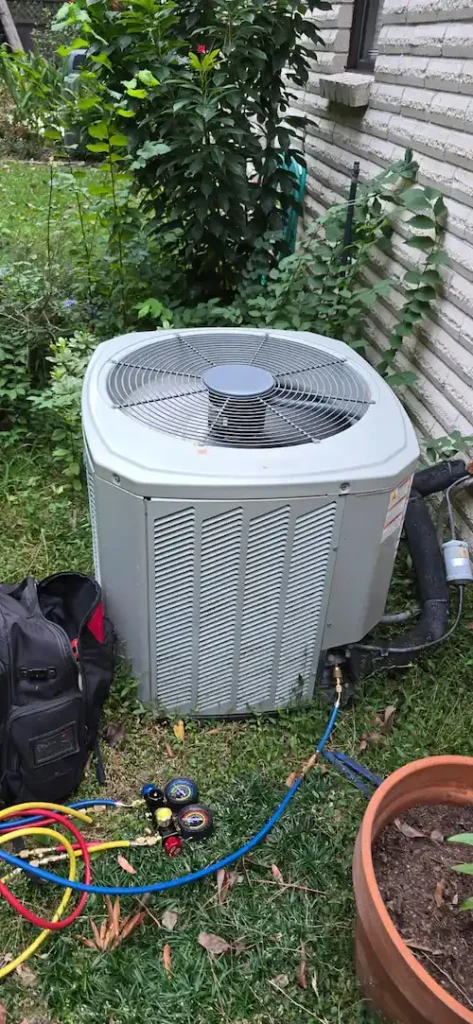
Why Texas Heat Pumps May Wear Faster
Houston and the Gulf Coast
Houston-area homes can face humidity, long cooling periods, and heavy condensate loads. Prioritize clean coils, clear drainage, sound airflow, and properly sealed ducts. Check sizing and controls because an oversized unit may cool quickly without managing moisture well. If the air feels damp after the thermostat reaches its setting, ask the technician to assess airflow, capacity, and runtime rather than assuming the system is simply too old.
Dallas–Fort Worth
Dallas–Fort Worth needs summer cooling and verified winter capacity. Check backup heat, duct airflow, and electrical capacity; do not copy old tonnage without a load calculation. If the system relies on electric resistance backup, ask how often it is expected to run and whether the control strategy is reflected in the operating-cost estimate.
Austin and Round Rock
In Austin and Round Rock, compare central equipment for sound ducts with ductless options for additions or difficult layouts. Include access, drainage, electrical work, and finish repairs. A home with an open plan may need fewer zones than a segmented layout, but a room-by-room load assessment should guide the design.
San Antonio
In San Antonio, check cooling demand, attic ducts, electrical service, and whether the quote includes permits, controls, and commissioning. Compare estimates on the same equipment scope; a lower quote may omit commissioning, duct sealing, or electrical items that another contractor included.
West Texas and the Panhandle
West Texas and Panhandle dust and wind can foul coils and filters. Consider placement, cleaning access, and local design data rather than assuming conditions statewide. Keep enough space for coil service while limiting exposure to blowing debris; do not box in the unit to hide it.
NOAA and state climate data confirm regional differences, but the reviewed evidence does not establish city-by-city heat-pump lifespan figures. Avoid precise local claims without field data.
How Maintenance Extends Heat Pump Life
1. Change the filter every one to three months
Inspect the filter monthly; replace it every one to three months or sooner if it is visibly loaded. Dust, pets, construction, and filter design change the interval. Use the size and airflow rating specified for the system. A restrictive filter can reduce airflow and stress equipment.
2. Schedule annual or seasonal service
Ask a professional to check thermostat operation, connections, coils, drainage, refrigerant readings, blower airflow, and controls. Schedule before the main cooling season and, if used for heating, before winter. Request a written summary.
Keep a service record
Save invoices, maintenance reports, equipment model numbers, warranty documents, and photos of recurring problems. This record helps a technician see whether a repair is isolated or part of a pattern. It also makes it easier to compare replacement proposals and verify that the new equipment matches the approved quote.
3. Keep the outdoor unit clear
Keep leaves and grass away from the outdoor coil and preserve the manufacturer’s airflow clearances. Avoid tight enclosures, direct roof runoff, and high-pressure washing that can bend fins. Have the coil cleaned with an appropriate method.
4. Address short cycling and ice buildup quickly
Short cycling or ice may signal sizing, airflow, refrigerant, thermostat, or control problems. Do not repeatedly reset the unit without diagnosing the cause.
If the unit stops heating or cooling, produces smoke, trips a breaker repeatedly, or creates an unusual electrical odor, shut it down if safe and request professional diagnosis. For related odor questions, see  Heater Smell Like It’s Burning. Treat an unfamiliar odor as a separate safety issue; age alone cannot explain it. If there is smoke, fire, or a gas-like odor, follow local emergency guidance rather than continuing to run the equipment.
Signs Your Heat Pump Is Nearing the End
1. Rising energy bills
A higher bill may reflect rates, weather, settings, insulation, ducts, or household use—not just failure. Compare weather-adjusted consumption and have the system tested.
2. Frequent repairs
Repeated major repairs deserve a written diagnosis. Ask what failed, whether the part is covered, and what additional failures are likely.
3. Inconsistent comfort
Uneven temperatures, weak airflow, and humidity problems can come from equipment or ducts, returns, insulation, and sizing. Diagnose distribution before replacing only the outdoor unit.
4. Noise and vibration
New grinding, buzzing, rattling, or vibration may signal a motor, fan, electrical, or compressor problem. Note when it happens and request diagnosis.
5. Age over 15 years
Age is a reason to inspect and compare options, not an automatic replacement order. ENERGY STAR lists an older air conditioner or heat pump, frequent repairs paired with rising energy bills, comfort issues, humidity problems, excessive dust, and noise as signs to consider replacement.
Consider those signs together. A 16-year-old system with stable comfort, available parts, and low repair needs may still be serviceable. A newer system with a major refrigerant leak, repeated electrical faults, or poor installation may deserve a replacement comparison sooner.
Repair or Replace: The 50% Rule and $5,000 Rule
There is no universal Texas formula that decides every repair. The 50% rule is a rule of thumb found in federal homeowner guidance: if a repair costs more than about half the cost of replacement, replacement deserves serious consideration. It is not a law, warranty rule, or guarantee of future savings.
For example, if a like-for-like replacement quote is $10,000, a $5,500 repair crosses that rough threshold. Before deciding, confirm that the replacement quote includes comparable equipment, labor, permits, removal, and startup work. A partial repair estimate should not be compared with an all-in replacement package.
The “$5,000 rule” multiplies system age by the repair estimate; a result above $5,000 is often used as a reason to compare replacement. It is a consumer rule of thumb, not an engineering standard or final decision. Repair type, efficiency, warranty, comfort, and future failure risk still matter.
| Situation | More likely direction | What to verify |
| Small repair on a newer system | Repair | Warranty, root cause, and whether the repair restores reliable operation |
| Major repair on a 12–15-year-old system | Compare replacement | Efficiency, repair history, load calculation, and full installed cost |
| Repair above roughly 50% of replacement cost | Replacement deserves serious consideration | Whether the quote includes all replacement work and commissioning |
| Age × repair cost exceeds $5,000 | Compare both paths; do not decide automatically | Remaining life, comfort, efficiency, and next-likely failures |
| Older R-22 system or hard-to-source parts | Compare replacement | Refrigerant type, service options, leak history, and equipment condition |
EPA phased out new production and import of most HCFCs, including R-22, in 2020; existing equipment may still be serviced using available supplies. Ask about leak history and service options, but do not replace a system on refrigerant label alone.
How Much Does a Heat Pump Replacement Cost in Texas?
Published prices vary by scope; use these figures for budgeting, not as Texas quotes. Replacement may be cheaper when ducts and the air handler can be reused. National cost guides combine different equipment types, labor assumptions, and project sizes. A local quote should specify the capacity and model, then separate required repairs from optional upgrades.
| Project type | Illustrative planning range | Scope warning |
| Air-source heat pump | About $4,000–$14,000 for standard installation; complex replacement can cost more | Scope and reusable equipment change totals |
| Multi-zone ductless mini-split | About $4,150–$18,050 for one system | More zones, electrical work, and finish work add cost |
| Geothermal heat pump | About $12,000–$40,000+ | Loop excavation, permits, and site access drive cost |
| Dual-fuel system | About $8,000–$25,000 | Includes two systems; scope and reuse change cost |
| Duct repair, electrical, or envelope work | Add separately | These items may be excluded from equipment-only quotes |
Cost sources differ: a 2026 homeowner-project guide estimates $4,236–$7,942 for replacement when a working air handler and ducts exist. Texas marketplace data average $11,874 before incentives across ducted, ductless, and hybrid installations—not replacements alone. Treat both as context, not a quote.
A ductless estimate also depends on how many rooms need separate control. Cost data for one multi-zone system include permit and labor ranges, but unusual line routes, new circuits, wall repairs, or additional indoor heads may change the final figure. Request the number of zones and indoor units in writing.
If you’re researching how much is a heat pump for a house, compare quotes that list equipment, removal, air handler, backup heat, electrical work, permits, commissioning, ducts, and warranty. The article explains Texas cost factors and why broad estimates cannot replace an itemized proposal for the actual home.
Houston, Dallas, Austin, and San Antonio Examples
Utility boundaries do not always match city limits. Rebates depend on the account, equipment, contractor, timing, and available funding.
| Area | Practical project question | Incentive note to verify |
| Houston and Katy | Check humidity, drainage, attic ducts, and outdoor clearance | CenterPoint lists incentives starting at $200 for eligible heat pumps; confirm address and terms |
| Dallas–Fort Worth | Check winter capacity and Oncor delivery service | Oncor says 2026 funding is exhausted; check for 2027 updates |
| Austin and Round Rock | Confirm equipment and contractor eligibility | Austin Energy lists conditional heat-pump rebates of $1,000–$1,600; recheck current terms |
| San Antonio | Check ducts, permits, controls, and utility eligibility | CPS Energy lists $90–$310 per ton for qualifying heat pumps; verify terms |
| West Texas | Protect airflow from dust and wind | Check the utility territory; no statewide assumption applies |
As of October 29, 2026, Texas HOMES and HEAR rebates were unavailable and had no confirmed 2027 launch date; advertised maximums were not claimable amounts. The IRS guidance reviewed says Section 25C does not cover qualifying property placed in service after December 31, 2025. Recheck official pages before signing.
Heat Pump vs. Furnace + AC: Which Lasts Longer?
A heat pump combines heating and cooling, while a furnace-plus-AC system uses separate equipment. Neither arrangement is automatically longer-lived. Compare each component’s age, repair history, operating hours, comfort, fuel costs, and replacement scope.
A heat pump’s compressor works during both heating and cooling, while a furnace operates only when heat is needed. But the separate air conditioner in a furnace-plus-AC system also has its own compressor. Ask for condition-based estimates for each component instead of assuming one configuration must last longer.
For compressor staging, see Heat Pump Single Stage vs Two Stage. Staging can affect comfort and runtime, but equipment condition, correct sizing, airflow, and maintenance still determine how the system performs over time.
If the home has no usable ducts, review Do Heat Pumps Work in Older Houses. It covers ductless, ducted, and dual-fuel retrofit considerations that can shape a replacement plan for an older property.
Rebates and Financing in Texas (2027)
Rebate rules and funding can change. As of the research date, Texas HOMES and HEAR remained unavailable with no confirmed launch date; their advertised maximums should not be deducted from a quote.
The IRS said Section 25C does not cover qualifying property placed in service after December 31, 2025. Do not count this as a 2027 incentive.
Utility programs vary by address, equipment, contractor, and year. Confirm eligibility before work begins and ask whether an application must be approved before installation. Do not count a rebate until the utility confirms your account and equipment qualify. Financing spreads payments but does not lower the price; compare APR, fees, term, and total repayment.
How to Get an Accurate Heat Pump Quote
Bring the right information
Bring the model and serial numbers, installation year, repair invoices, energy bills, and a list of uncomfortable rooms. Note freeze-ups, short cycling, noise, and weather-related problems.
Request a load calculation
Ask for the load calculation, capacity, efficiency, model number, and performance at local design temperatures. Square footage alone is not enough. Confirm whether planned insulation or duct work is assumed.
Inspect the distribution system
The quote should address ducts, airflow, drainage, line sets, and electrical circuits. Ask for the inspection or load calculation behind any duct or panel upgrade.
Compare itemized scopes
Compare two or more itemized quotes when practical. Check removal, equipment, air handler, thermostat, backup heat, permits, electrical and duct work, startup testing, warranty, and cleanup. Ask each contractor to list what is excluded, such as drywall repair, duct replacement, electrical panel work, or attic access. That prevents an artificially low base price from obscuring the likely project total.
Use a qualified service provider
Qualified professionals should handle refrigerant, electrical, load calculations, and commissioning. This is not a DIY installation guide. A good quote states assumptions, warranty, and possible price changes.
Confirm warranty and commissioning
Ask who registers the equipment, how long parts and labor are covered, and what maintenance is required to keep coverage active. Commissioning should verify airflow, controls, refrigerant operation, drainage, and heating and cooling modes. Keep the final startup report with the invoice and model numbers.
For local evaluation and repair questions, contact 24sevenac’s heating service and confirm what consultation or replacement assessment is available in your service area. A technician can diagnose the fault, check whether repair is practical, and identify work that an equipment-only replacement estimate may omit.
FAQ: How Long Should Heat Pump Last?
How do I know if my heat pump needs replacing?
Consider replacement when major repairs recur, comfort declines, or a repair nears a substantial share of replacement cost. Age alone is not enough; get a diagnosis, check remaining warranty, and compare an itemized quote with the repair proposal.
Can a heat pump last 30 years?
A conventional air-source system should not be budgeted for 30 years. Geothermal loops may outlast indoor equipment; ductless estimates vary widely with installation and maintenance. If an older unit is still comfortable and repairs are modest, there is no need to replace it solely to meet a generic age milestone.
How expensive is it to replace a heat pump?
A standard replacement may cost several thousand dollars if ducts and compatible indoor equipment can be reused. Geothermal, multi-zone ductless, or electrical work can raise totals substantially. Check quote scope, system type, location, and whether the project includes an air handler, permits, and removal.
Book a Heat Pump Consultation With 24sevenac
Get an Accurate Heat Pump Quote for Your Texas Home
Not sure how long your heat pump will last? Schedule a free consultation with 24sevenac in Houston, Katy, Sugar Land, Pearland, Austin, Dallas–Fort Worth, or San Antonio, subject to current service availability. Request a load calculation, duct and electrical review, and itemized quote. Confirm scope, warranty, timing, and available utility programs before authorizing work.