
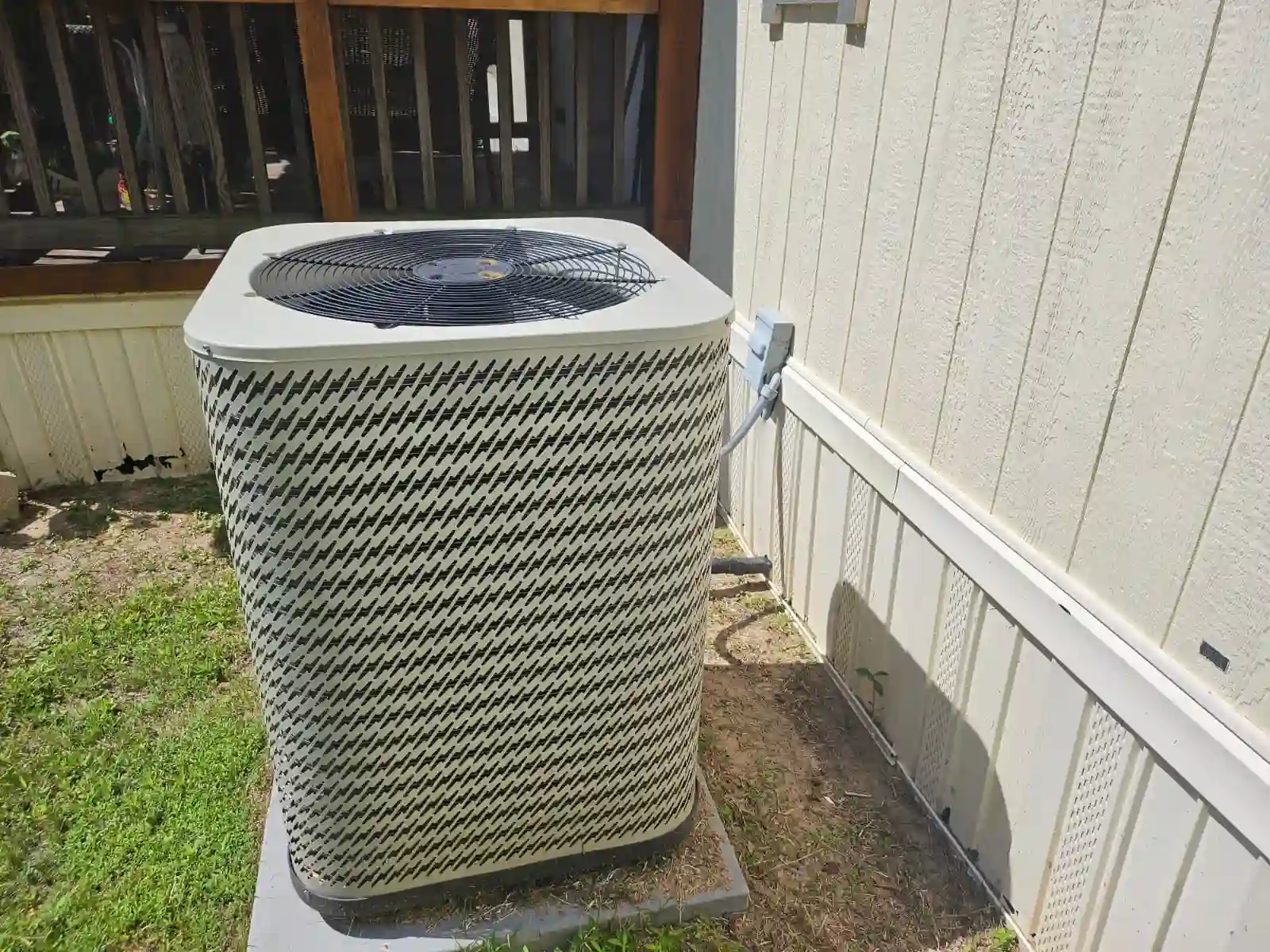
How much is a heat pump for a house in Texas? A straightforward air-source replacement may fit a $6,000–$15,000 planning range, but published installed estimates vary from $4,000 to $25,000+ by scope. A quote-market Texas average is $11,874 before incentives. Equipment, ducts, efficiency, and electrical work change the total.
How Much Is a Heat Pump for a House?
A whole-home air-source heat pump in Texas may cost about $6,000–$15,000 for a straightforward replacement, while current published installed estimates range from $4,000 to $25,000+ by system and scope. A 2,000-square-foot example may run $10,000–$20,000. Ductless starts near $2,000 per zone; geothermal commonly costs $20,000–$50,000+. Get an itemized quote after a load calculation.
Why one “average price” can mislead
If you searched “how much does a heat pump cost for a house,” start by checking what “installed” includes. One guide lists air-source jobs at $4,000–$12,000; broader estimates reach $10,000–$25,000+. A quote-market Texas average is $11,874 before incentives. These are differently scoped estimates, not guaranteed local prices.
Compare the full installed scope
A practical starting budget
Start with a broad budget, then compare itemized proposals with the same scope. Usable ducts may keep a change-out lower; panel or duct work, higher efficiency, and new zoning can raise it. Do not compare only a monthly payment or price per ton.
Heat Pump Cost by System Type
System type determines the indoor units, ductwork, and installation complexity. These are broad U.S. estimates, not guaranteed Texas quotes; labor, permits, equipment match, and access change the total.
| System type | Illustrative installed cost | Often considered for |
| Ducted air-source | About $4,000–$12,000 on a dedicated price guide; broad whole-system guides reach $10,000–$25,000+ | A home with compatible central ducts; scope drives the large range |
| Ductless mini-split, single zone | About $2,000–$4,000 | One room, addition, garage apartment, or area without ducts |
| Ductless mini-split, two zones | About $3,000–$8,000 | Two separate rooms or comfort zones |
| Ductless mini-split, 3+ zones | About $7,000–$17,000 | Several rooms; each indoor head and refrigerant run adds scope |
| Geothermal / ground-source | About $20,000–$50,000+ | A project where the owner values ground-loop performance and can accommodate excavation |
| Dual-fuel / hybrid | Marketplace system average around $14,353; individual quotes vary | A heat pump paired with a backup gas furnace |
Ducted air-source systems
A ducted air-source heat pump transfers heat between indoor and outdoor air and distributes it through an air handler and ducts. It can provide heating and cooling. Compatible, sealed ducts may be reusable; leaks, poor sizing, or attic runs can require work that changes cost and comfort.
Because a change-out differs from a project with new ducts or premium equipment, ask what each price includes before judging it.
Ductless mini-splits
Ductless systems connect one or more indoor air handlers to an outdoor unit. Current guide estimates are $2,000–$4,000 for one zone, $3,000–$8,000 for two, and $7,000–$17,000 for three or more. Extra heads, long line runs, new circuits, wall access, and condensate routing affect price.
Ductless may fit a room addition or a home without ducts, but is not always cheaper. Compare head locations, capacity, electrical work, controls, line covers, and labor with a ducted option for larger homes.
Geothermal and dual-fuel systems
A geothermal heat pump uses an underground loop; excavation or drilling helps explain its higher price. One guide estimates $20,000–$50,000+, depending on lot, soil, loop design, and access. Compare total installed costs, not equipment alone.
A dual-fuel system pairs a heat pump with a backup furnace. Price depends on whether the furnace is reused, controls, and electrical scope. One marketplace reports a $14,353 hybrid average; it is not a local or like-for-like quote.
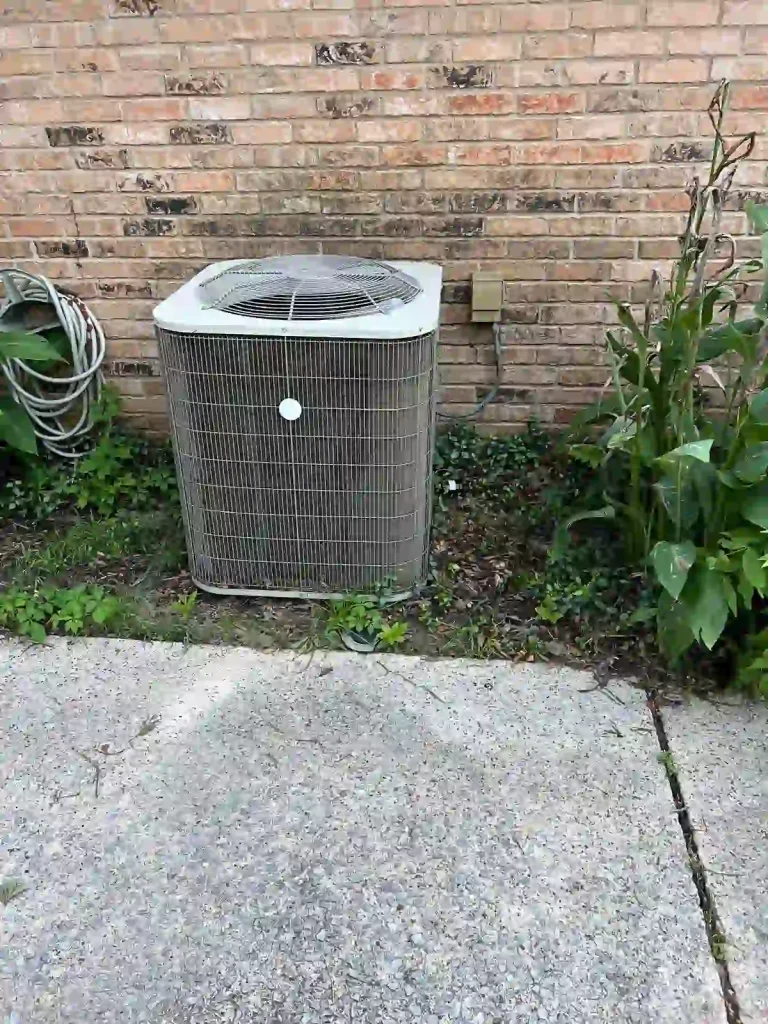
Heat Pump Cost by Home Size and Tonnage
Home size can influence capacity, but it does not determine it. The table gives broad national budgeting examples—not a design specification for your Texas home.
| Home size | Example capacity in a cost guide | Illustrative installed range |
| 1,000 sq. ft. | 1.5–2 tons | $6,000–$8,500+ |
| 1,500 sq. ft. | About 2.5 tons | $8,000–$10,500+ |
| 2,000 sq. ft. | About 3 tons | $10,000–$20,000+ |
| 2,500 sq. ft. | 3.5–4 tons | $12,000–$22,000+ |
| 3,000 sq. ft. | 4–5 tons | $18,000–$25,000+ |
Why the 2,000-square-foot estimate varies
For 2,000 square feet, use $10,000–$20,000 as a rough budget, not a quote. The guide’s three-ton example is not a rule: insulation, windows, ceiling height, leakage, shade, ducts, and layout all affect load.
A ton is 12,000 Btu per hour of capacity. Ask a contractor to calculate loads using ACCA Manual J or an accepted method, then select matched equipment. ACCA identifies Manual J as the residential sizing-load standard.
Do not buy by square footage alone
Oversizing can increase cost and impair comfort; undersizing can struggle in design weather or rely on backup heat. Request the load calculation, equipment rationale, and model capacity at relevant outdoor temperatures.
Heat Pump Cost by Efficiency (SEER2 & HSPF2)
SEER2 measures seasonal cooling efficiency; HSPF2 measures seasonal heating efficiency. Higher ratings may reduce electricity use, but savings depend on rates, sizing, ducts, controls, weather, and installation.
| Example rating tier | Illustrative installed cost range | How to interpret it |
| 14–15 SEER2 / around 7.5 HSPF2 | $6,000–$12,000+ | Broad national guide estimate, not a Texas minimum-price promise |
| 16–17 SEER2 / around 8–9 HSPF2 | $8,000–$15,000+ | More efficient equipment may cost more; compare matched systems |
| 18–19 SEER2 / around 9–10 HSPF2 | $11,000–$18,000+ | May be worth comparing against the home’s modeled use and tariff |
| 20+ SEER2 / 10+ HSPF2 | $15,000–$25,000+ | Premium installations can include other upgrades, so price is not efficiency alone |
These are broad cost-guide tiers, not a controlled comparison of efficiency alone. Capacity, controls, indoor equipment, and scope also affect price. Compare matched-system ratings and full quotes, not the outdoor unit alone.
Calculate the premium rather than assuming payback
Ask for the price difference between matched options and an electricity-use estimate based on your load and tariff. Compare added cost with expected savings over your likely ownership period. DOE uses a 15-year average life in lifecycle calculations; actual service life varies.
For staging, see Heat Pump Single Stage vs Two Stage. Ask the installer to quantify its price premium and expected operation; two-stage equipment is not always the best financial fit.
What’s Included in a Heat Pump Quote?
A written quote should identify the scope—not just the brand or tonnage. A full system proposal may include the outdoor unit, compatible indoor air handler or coil, thermostat or controls, refrigerant piping, electrical connections, labor, startup, and commissioning. Some quotes also include permit fees, removal of old equipment, and basic duct adjustments. Other contractors list these separately, so two totals may not cover the same work.
Ask for itemized equipment and labor
Request indoor and outdoor model numbers plus the AHRI reference for the matched system. The proposal should state capacity, SEER2/HSPF2, parts and labor warranties, controls, backup heat, permit, and inspection responsibilities.
Match equipment, not just brand names
Confirm startup and quality checks
A heat pump’s performance depends on installation as well as its rating. Ask about refrigerant charging, line inspection, airflow, controls, and a startup report. DOE warns that oversizing, improper charge, and leaky ducts can reduce comfort and savings.
Before signing, identify exclusions, code corrections, duct sealing, panel work, disposal, and warranty registration. When a quote lists the residential heat pump system cost, make sure it means the same work as the competing proposal.
What’s Not Included: Hidden Costs to Watch For
Equipment may not be the whole project. Have the contractor inspect ducts and electrical capacity, then list required upgrades separately. These broad cost-guide examples vary by site and permit rules.
| Possible add-on | Broad published example | Why it may be needed |
| New ductwork | About $2,400–$6,600 | Home lacks usable ducts or the existing layout is damaged/unsuitable |
| Duct replacement or modification | About $1,400–$5,600+ | Leaks, sizing, or layout need correction |
| Electrical panel upgrade | About $1,800–$2,500 | Existing panel/service cannot support the new equipment or other loads |
| Permit and inspection | Often $100–$300+, but city-specific | Local code requires permit or inspection |
| Ductless electrical circuit | About $250–$900 | Dedicated circuit is required for the new equipment |
| Air handler | About $1,500–$3,400+ | Existing indoor equipment is incompatible or due for replacement |
| Pad, removal, line sets, or controls | Varies | Site, distance, disposal, and control requirements differ |
These items may overlap with a package price and will not all apply to each job. Ask what is included and request written change-order prices for newly discovered work, such as long line runs or difficult attic access.
Ductwork can change comfort and cost
Existing ducts may need airflow adjustments for the new equipment. Ask whether the bid includes testing and sealing or only reconnection. For ductless work, confirm indoor-head count, line covers, drains, and wall penetrations.
Electrical work and permits
Panel capacity, circuit availability, wire runs, and local permits can change the total. Ask for the technical reason and a separate price for any panel upgrade; age alone does not prove one is necessary.
Texas-Specific Pricing: Houston, Dallas, Austin, San Antonio
A 2026 quote-market dataset reports $11,874 before incentives for Texas. It is not an official state survey or a fixed price for Houston, Dallas–Fort Worth, Austin, or San Antonio.
Local labor, utilities, system type, ducts, electrical service, and access all matter; the examples below are not city-by-city price averages.
| Area | Cost factors worth asking about | Local incentive check |
| Houston and Katy | Ducts, attic access, humidity control, and electrical scope | CenterPoint lists incentives starting at $200 for eligible systems; service-area and contractor rules apply . |
| Dallas–Fort Worth | Cold-weather capacity, backup heat, and duct repairs | Check the address’s utility program; other-city rebates may not apply. |
| Austin and Round Rock | Matched-system efficiency, permits, replacement eligibility | Austin Energy posts $650–$950 heat-pump tiers for eligible customers . |
| San Antonio | Existing-unit eligibility, one-for-one replacement, permits | CPS posts $90–$310 per ton, depending on tier and replacement scenario . |
| West Texas | Outdoor siting, dust, line runs, local permits | Check the utility and municipality serving the address. |
How to use the Texas average
Different quotes may cover different equipment, electrical work, or ducts. Compare model numbers, capacity, permits, warranty, and startup scope; a state average cannot validate a quote by itself.
Utility discounts are local and conditional
Rebates can require a local utility account, approved contractor, qualifying model, eligible existing equipment, and on-time application. Check current rules before subtracting an incentive.
Heat Pump vs. Furnace + AC: Which Is Cheaper?
Initial costs depend on scope. One guide estimates furnace-and-AC replacement at $5,000–$11,000 and new HVAC with ductwork at $7,000–$16,000; heat-pump guides range from $4,000 to $25,000+. These are not all like-for-like packages.
| Option | Broad initial-cost reference | Main scope question |
| Air-source heat pump | $4,000–$25,000+ across published guides | Is it a basic change-out or a full new system with upgrades? |
| Furnace + central AC | $5,000–$11,000 replacement; $7,000–$16,000 with new ductwork | Are both units being replaced, and is ductwork included? |
| Dual-fuel | Marketplace average around $14,353; quote varies | Is the furnace new or reused, and what controls/backup are included? |
Compare the annual bill using your rates
A heat pump moves heat and can cool; a furnace burns fuel or uses resistance heat. Whether the pump costs less to run than gas depends on heat loss, efficiency, controls, and local energy prices. A statewide rate cannot predict one household’s bill.
EIA reports a Texas residential average of 15.88 cents/kWh for July 2026, but your tariff and delivery charges may differ. Compare recent bills for both fuels using your home’s load, not a generic savings promise.
Which option may fit your project?
A heat pump may suit a project replacing both heating and cooling. Furnace-plus-AC can make sense if gas heat is preferred or the furnace is new; dual fuel preserves backup heat but adds controls. Compare same-scope quotes, energy use, lifespan, and warranty.
Rebates, Tax Credits, and Financing in Texas
Confirm that an incentive is open and that your home and model qualify. The state status page, last updated August 21, 2026, says Texas’s HOMES and HEAR programs are not yet accepting applications and await federal approval. Their advertised maximums are future program limits—not discounts available today.
HOMES rebates for whole-home efficiency
Texas describes future HOMES rebates of up to $8,000 for qualifying whole-home efficiency improvements. The program is not open yet; verify launch and household eligibility before budgeting.
HEAR rebates for income-qualified households
The planned HEAR program describes up to $14,000 per household for eligible electrification upgrades, with income and equipment requirements. Texas’s status page says applications are not currently available.
Federal tax credits ended for new 2027 installations
IRS says Section 25C for qualified heat pumps and Section 25D for geothermal property are unavailable for installations placed in service after December 31, 2025. Do not subtract either credit from a 2027 quote. For qualifying 2025 work, check IRS rules or a tax professional.
The installation date matters
Buying equipment in 2025 is not enough if it was placed in service after the deadline. Check the IRS rules for the installation year.
Local utility rebates may still be available
Austin Energy posts $650–$950 heat-pump rebates by tier, subject to account, equipment-age, contractor, permit, and sizing rules. CPS Energy lists $90–$310/ton after failure and $115–$310/ton for eligible early replacement. CenterPoint incentives start at $200 for qualifying systems in its Houston electric territory. Verify current terms before signing.
Financing is a payment method, not a discount
Financing can spread payments but adds interest or fees. Compare APR, term, origination and prepayment fees, deferred-interest rules, and total repayment. Ask for cash and financed prices; a lower monthly payment may simply mean a longer loan.
How Long Does a Heat Pump Last?
DOE uses 15 years as an average air-source heat-pump life for lifecycle calculations—not a guarantee. Sizing, installation, climate, maintenance, and usage affect actual service life.
Installation and maintenance matter
Keep filters and airflow clear, follow the manufacturer’s service schedule, and ask for a written maintenance plan. Maintenance may catch issues early but cannot guarantee a lifespan or prevent every repair.
For a local overview, see How Long Do Heat Pumps Last. Consider age with repair history, efficiency, comfort, and replacement cost; age alone does not decide.
Is a Heat Pump Right for Your Texas Home?
A heat pump may fit if you need heating and cooling, have usable ducts or a practical ductless plan, and want to compare electric operation with current equipment. Texas’s broad climate category cannot determine the right unit or tariff for every home.
Ask these questions before choosing
- Are you replacing both heating and cooling equipment, or only one part?
- Does the home have ducts, and have they been inspected for leakage and airflow?
- Can the panel and wiring support the equipment and any backup heat?
- What are the effective electricity and gas rates on your current bills?
- Will you retain a furnace for backup, or rely on heat-pump and auxiliary heat?
- Is the equipment sized from a documented load calculation?
- Which local rebate applies to your actual utility account and model?
If the furnace is newer, replacing it immediately may not pay unless cooling equipment also needs work. If the house lacks ducts, compare new ductwork with a multi-zone mini-split. Evaluate comfort and total ownership cost, not just equipment price.
How to Get an Accurate Heat Pump Quote
Request three written proposals for the same scope. Share home size and age, existing equipment, comfort issues, utility bills, ducts, and planned work. Ask about load calculation, duct inspection, electrical capacity, and permits.
Use a comparison checklist
Record matching details for every proposal
- Sizing: Request the Manual J load calculation or equivalent documentation, not a square-foot rule alone.
- Equipment: Compare matched indoor/outdoor model numbers, capacity, SEER2, HSPF2, stages, and warranty.
- Scope: List labor, air handler, thermostat, electrical, refrigerant lines, duct repairs, permit, disposal, startup, and exclusions.
- Incentives: Verify utility territory, contractor participation, model eligibility, home-age requirements, and deadlines directly with the program.
- Operating estimate: Use your actual electric and gas rates, current bills, and expected use; request the assumptions in writing.
- Financing: Compare cash price with total financed repayment, not only the monthly payment.
- References and licensing: Check state licensing and ask who will perform and inspect the work.
If an unusual odor prompted replacement research, read Heater Smell Like It’s Burning and arrange diagnosis; odor alone does not prove replacement is needed. See the heating service page for service details.
Book a Heat Pump Consultation With 24sevenac
24SevenAC lists heating service for central heat pumps, mini-splits, and hybrid systems in Houston and Katy. Ask whether an installation consultation is available for your address and request an itemized quote. The service page lists (713) 832-5545; confirm current scope and pricing directly.
FAQ: How Much Is a Heat Pump for a House?
How much is a heat pump for a 3-bedroom house in Texas?
Bedroom count is not enough to size or price a system. A three-bedroom home might be about 1,500–2,500 square feet, but insulation, windows, ceiling height, ducts, and layout matter. A broad cost guide puts examples in that floor-area range at roughly $8,000–$22,000+, before considering local scope and possible hidden work. Ask for a load calculation and itemized quotes.
Are heat pumps really worth it?
They can be, particularly when one system replaces both heating and cooling equipment and the home has suitable ducts and electrical service. But savings depend on utility rates, system efficiency, sizing, and how the household operates the thermostat. Compare a heat-pump proposal with a same-scope furnace-and-AC quote using your own bills; do not rely on a guaranteed-savings claim.
How much is a heat pump for a 2,000-square-foot house in Texas?
Use roughly $10,000–$20,000 as a starting estimate for a 2,000-square-foot example, not a quote. Cost guides pair that size with about a three-ton system, but the required capacity must be calculated for the actual building. Duct repair, a panel upgrade, higher efficiency, or new equipment can increase the total.


