
How Repair AC Compressor: Safe Troubleshooting, 2026 Costs, and When to Replace It
Learning how repair ac compressor issues works helps you avoid paying thousands for a misdiagnosed system. When your central air conditioner stops blowing cold air on a humid summer day, it is easy to assume the worst. However, what looks like a dead compressor is frequently just a failed $50 capacitor, a tripped circuit breaker, or a dirty coil.
Understanding the difference between a simple electrical fix and a major sealed-system failure is critical. This comprehensive 2026 guide breaks down safe DIY checks, professional diagnostic steps, detailed regional costs, legal refrigerant regulations, and how to evaluate whether to fix or replace your unit.
Quick Answer: Can You Repair a Home AC Compressor?
The Short Answer: You cannot directly repair the internal mechanical parts of a sealed home AC compressor. If the internal motor burns out or seizes, the entire compressor capsule must be replaced. However, external electrical components that power the compressor—such as run capacitors, contactors, wiring harnesses, and hard-start kits—can easily be repaired or replaced by a professional technician.
Understanding how repair ac compressor problems differs from fixing external components saves homeowners thousands of dollars. Before agreeing to a costly replacement, always ensure a licensed technician tests your system’s electrical controls.
What the AC Compressor Does in a Central Air System
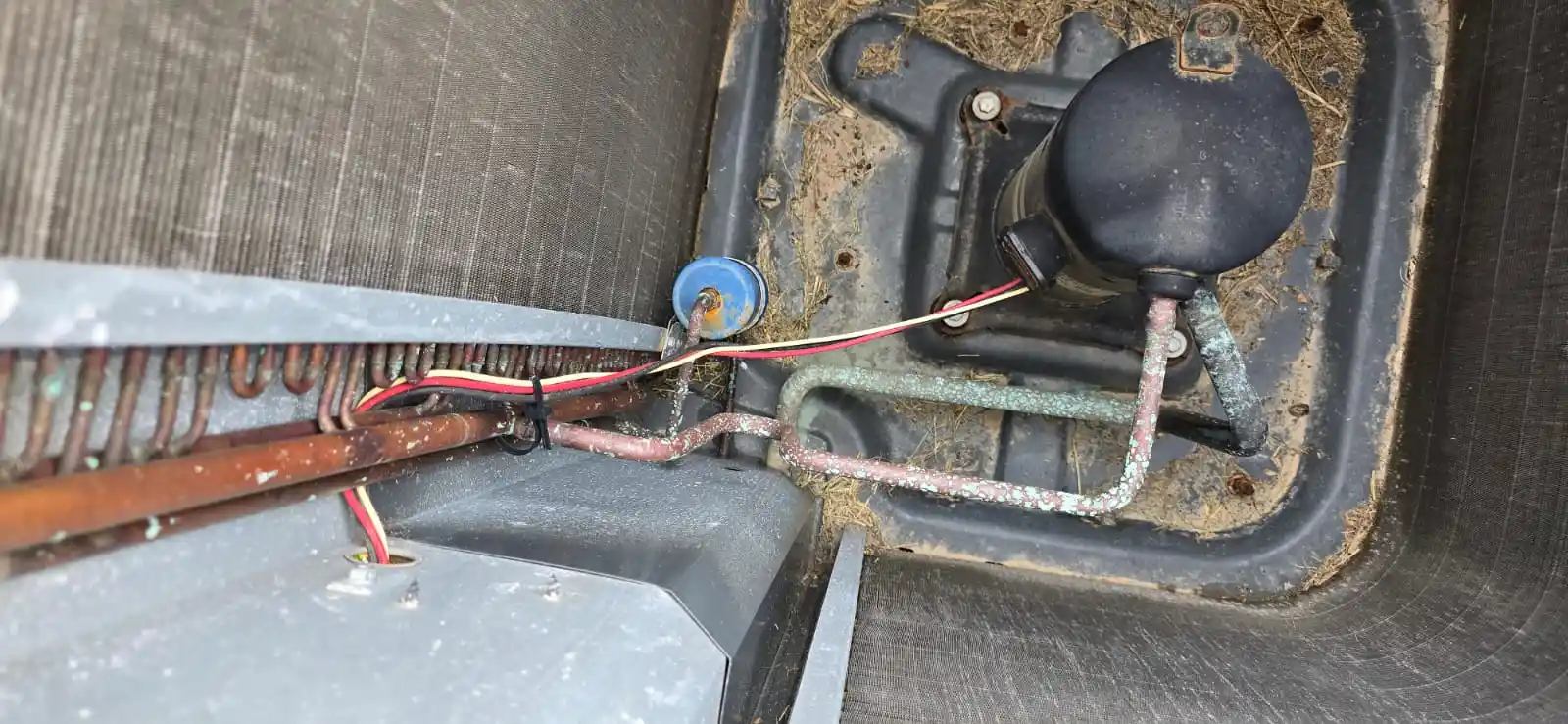
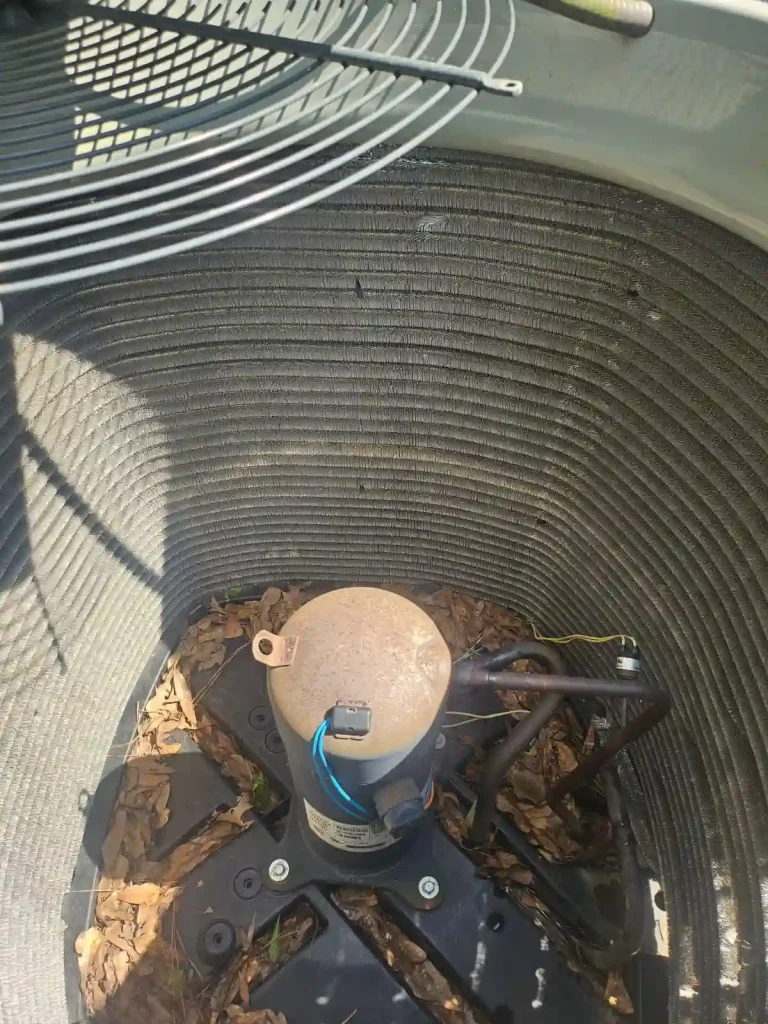
The compressor is often called the “heart” of your central air conditioning unit. Located inside the outdoor condensing cabinet, its primary function is to pump chemical refrigerant through the closed-loop system, creating the pressure changes required to transfer heat out of your home.
Here is how it operates during a normal cooling cycle:
- Sucking Low-Pressure Vapor: The compressor draws in cool, low-pressure gaseous refrigerant that absorbed heat from inside your home via the indoor evaporator coil.
- Compressing the Gas: It squeezes the gas into a high-pressure, high-temperature vapor. This pressure increase significantly raises the boiling point of the refrigerant.
- Pumping to the Condenser: The superheated gas is pushed into the outdoor condenser coil, where the outdoor fan blows air over the fins, cooling the refrigerant and turning it back into a liquid.
Without a functioning compressor, refrigerant cannot circulate, and your system will simply blow warm air through your supply vents.
Compressor Problem or Another AC Fault?
Before assuming your compressor has suffered a total mechanical failure, you must eliminate minor component faults. Surrounding electrical and airflow failures produce symptoms that closely mirror a broken compressor.
Bad Capacitor vs. Bad Compressor
A run capacitor provides the electrical boost necessary to start and run the compressor motor. When a capacitor bulges, leaks oil, or loses microfarad capacity, the compressor will hum loudly as it tries to start, but it will fail to kick on and eventually trip the thermal overload switch. Swapping a bad capacitor costs a fraction of a compressor replacement.
Tripped Breaker or Electrical Fault
If your outdoor unit is completely silent while the indoor blower fan runs, check your main electrical panel. A high-voltage surge or loose wiring can trip the dedicated double-pole breaker. Arced contactor points can also block voltage from reaching an otherwise healthy compressor.
Dirty Condenser Coil
When mud, grass clippings, and debris coat the outdoor condenser coil, heat cannot escape. This causes internal head pressure and temperatures to spike. To protect itself, the compressor’s internal thermal overload switch will trip, shutting the unit down until it cools off. Learning how to clean your central air unit inside and out prevents thermal overloads and extends equipment lifespan.
Low Refrigerant or Refrigerant Leak
Refrigerant does not get consumed during normal operation. If your system is low on charge, a physical leak exists. Low pressure causes the evaporator coil to freeze into a solid block of ice, starving the compressor of cool return gas and triggering low-pressure safety cutouts.
Fan Motor Failure
If the outdoor fan motor seizes, heat rapidly builds up inside the metal cabinet. The compressor will overheat and shut down within minutes while the fan remains completely stationary.
AC Symptom Diagnostic Matrix
| Observed Symptom | Likely Faulty Component | Typical Repair Difficulty |
| Humming outdoor unit, fan spins, no cooling | Failed Run Capacitor | Quick / Low Cost |
| Breaker trips instantly when cooling starts. | Shorted Compressor or Failed Hard Start | Professional Diagnostic Required |
| Outdoor fan runs, no compressor noise, warm air | Open Contactor or Thermal Overload | Low to Moderate Cost |
| The system starts, squeals loudly, and then shuts down. | Internal Mechanical Seizure | High / Replacement Needed |
| Ice forming on outdoor copper refrigerant line | Low Refrigerant Leak or Clogged Air Filter | Professional Leak Repair |
Signs Your Home AC Compressor Is Failing
Recognizing early warning signs allows you to address electrical issues before they destroy the compressor motor entirely:
- Warm Air Blowing From Supply Vents: The indoor fan circulates air, but because the compressor is not running, no heat exchange occurs.
- Frequent Circuit Breaker Tripping: The compressor draws excessive electrical current (high locked-rotor amps) during startup due to internal mechanical friction.
- Hard Starting / Loud Humming: The compressor struggles to overcome internal resistance or electrical imbalance, producing a deep metallic hum before shutting off.
- Severe Mechanical Knocking or Rattling: Internal valves, pistons, or scroll spirals have broken loose inside the sealed dome casing.
- Visible Oil Leaks Near the Base: Refrigerant oil leaking from the terminal plug or brazed joints indicates a breached housing.
Safe Checks Homeowners Can Do
Homeowners should never open the electrical control box or pierce the sealed refrigerant circuit. However, you can safely perform preliminary troubleshooting before calling a professional AC repair service.
Check the Thermostat and Filter
Ensure your thermostat is set to “Cool” and the target temperature is at least 3 to 5 degrees below the current room temperature. Inspect your air filter; a severely clogged filter restricts airflow, causing systemic pressure imbalances that mimic compressor failure.
Inspect the Outdoor Disconnect
Check the outdoor pull-out disconnect switch box mounted on the wall near your condenser cabinet. Ensure the handle plug is firmly seated in the “ON” position and inspect household circuit breakers.
Clear Leaves and Debris
Turn off power at the thermostat, then clear leaves, weeds, grass clippings, and dirt away from the outdoor cabinet. Maintain at least 2 feet of clear space around the sides to ensure unrestricted airflow.
Observe Sounds and Cycling Behavior
Stand near the outdoor cabinet while someone turns on the thermostat inside. Listen carefully: do you hear a click, followed by a quiet hum, a fan spinning, or a harsh metallic rattling noise? Take note of these observations to share with your technician.
Do Not Open the Sealed Refrigerant Circuit
Never attempt to pierce refrigerant lines, attach gauge manifolds without certification, or open the sealed compressor dome. Central air systems operate under pressures exceeding 300 to 400 PSI and contain high-voltage electrical connections capable of causing severe injury or death.
How HVAC Technicians Diagnose a Compressor
When a technician arrives, they follow a systematic procedure to isolate the root cause of failure.
1. Voltage and Contactor Test: Electrical Input Verification.
The technician measures incoming line voltage at the outdoor contactor to ensure proper electrical supply (typically 220V–240V) reaches the unit.
2. Capacitor and Start-Assist Test: Capacitance Check.
Using a multimeter set to microfarads (µF), the technician tests the run capacitor and hard-start kit against factory tolerances.
3. Compressor Amp Draw Measurement: Amperage Diagnostics.
Using a clamp meter, the technician measures running amps (RLA) and locked-rotor amps (LRA) to verify if the motor is pulling excessive current.
4. Winding and Ground-Fault Checks: Resistance Testing.
The technician measures electrical resistance across the compressor terminal pins (Start, Run, Common) and checks for short circuits to ground.
5. Refrigerant Pressure and Airflow Diagnosis: Sealed System Pressures.
Digital gauge manifolds are connected to measure suction and liquid line pressures, evaluating compressor pumping efficiency and checking for leaks.
6. Root-Cause Inspection: Root-Cause Identification.
The technician identifies why the failure occurred (e.g., acid contamination, liquid slugging, low oil, or electrical surge) to prevent immediate failure of a new unit.
What Professional Compressor Repair Involves
If diagnosis reveals a burned-out or mechanically seized compressor, replacing the component requires strict technical protocols.
Refrigerant Recovery
Technicians connect an EPA-certified recovery machine and tank to safely extract all chemical refrigerant from the system without venting it into the atmosphere.
Compressor Removal
High-voltage electrical leads are disconnected, and an oxygen-acetylene torch is used to unbraze the suction and discharge copper lines from the damaged compressor casing.
Filter-Drier Replacement
The existing liquid-line filter-drier is removed and discarded. A new, oversized bi-directional filter-drier is installed to catch residual moisture and acid.
Nitrogen-Purged Brazing
The new compressor is bolted to the base pan. While flowing dry nitrogen gas through the lines to prevent internal copper oxidation (scale), the technician brazes the copper joints securely.
Deep Vacuum and Leak Testing
The system is pressurized with nitrogen to test for leaks. Once confirmed leak-free, a high-powered vacuum pump pulls the system down below 500 microns to evacuate moisture and air.
Refrigerant Recharge and Startup Measurements
The technician weighs in fresh, virgin refrigerant using a digital scale according to factory data plate specifications, verifying subcooling and superheat levels during operation.
AC Compressor Repair and Replacement Cost in 2026
Understanding average industry pricing helps homeowners evaluate repair quotes accurately.
- Diagnostic Visit: $85 – $200 (Typically waived or applied toward repair costs if service is authorized).
- Capacitor or Contactor Repair: $150 – $450 (Covers parts and minor electrical labor).
- Compressor Under Warranty: $800 – $1,600 (Parts covered by manufacturer; cost represents professional labor, refrigerant, and filter-drier replacement).
- Out-of-Warranty Compressor Replacement: $1,400 – $3,200 (Includes new compressor, labor, EPA refrigerant recovery, filter-drier, and system recharge).
- Full Outdoor Unit Replacement: $2,800 – $5,500 (Replaces entire condensing cabinet, fan, coil, and compressor assembly).
- Full Central AC Replacement: $5,500 – $12,000+ (Includes indoor air handler/furnace coil, outdoor unit, line set, and full system balancing).
Repair vs. Replace: A Practical Decision Guide
When facing a major repair quote, evaluating system age and financial thresholds prevents poor investments.
Total Financial Risk = System Age (Years) × Estimated Repair Cost ($)
The $5,000 Rule: If your calculation yields a result greater than 5,000, or if the repair quote exceeds 50% of the cost of a brand-new unit, replacing the system is almost always the smarter long-term financial choice.
Repair vs. Replace Evaluation Matrix
| Factor | Favor Repairing Component | Favor Replacing Full System |
| System Age | Under 8 Years Old | Over 10 to 12 Years Old |
| Warranty Status | Covered under factory parts warranty | Expired out-of-warranty coverage |
| Refrigerant Type | Modern R-410A or R-32 | Phase-out R-22 refrigerant. |
| Overall Condition | Ductwork and indoor coil in great shape | Frequent breakdowns across multiple parts |
How Warranty Coverage Changes Your Cost
Most major residential HVAC manufacturers (such as Carrier, Trane, Lennox, Rheem, and Goodman) provide a 10-year functional parts warranty on original equipment if registered within 60 to 90 days of installation. Unregistered systems typically default to a 5-year warranty period.
If your system is within its warranty window, the manufacturer covers the cost of the replacement compressor capsule itself (a $600 to $1,400 value). However, homeowners remain responsible for out-of-pocket labor costs, EPA refrigerant fees, brazing materials, filter dryers, and shipping expenses.
R-22, R-410A, and New Refrigerant Considerations
The type of chemical refrigerant circulating in your cooling system heavily impacts repair feasibility:
- R-22 Systems (Pre-2010): R-22 has been fully phased out due to ozone-depleting properties. Virgin R-22 is scarce and extraordinarily expensive. If an old R-22 compressor fails or loses its charge, repairing it is financially unfeasible.
- R-410A Systems (2010–2024): R-410A remains widely available, but regulatory phase-downs under the AIM Act are steadily increasing its long-term cost.
- Next-Generation A2L Refrigerants (R-454B & R-32): Systems manufactured starting in 2025 operate on low-GWP (Global Warming Potential) mild-flammability refrigerants. Replacement parts and compressors for these modern units require specialized tools and trained technician protocols.
Regional Cost Examples Across the USA
HVAC labor and licensing requirements vary significantly by state, climate region, and local market demand.
2026 USA Regional Price Estimates
| Market Region | Estimated Compressor Replacement Range | Key Cost Drivers |
| Texas | $1,300 – $3,200 | Extreme summer heat demands, large tonnage systems, and a competitive labor market |
| Florida | $1,400 – $3,400 | Continuous year-round runtime, coastal humidity, high corrosion factors |
| California | $1,700 – $4,000 | Higher municipal labor rates, strict Title 24 energy compliance standards |
| New York | $1,700 – $4,200 | Urban accessibility challenges, higher commercial overhead, high state taxes |
| Illinois | $1,400 – $3,400 | Seasonal variance between the Chicago metro area and rural Midwest communities |
Why Compressors Fail Repeatedly
A replacement compressor installed without addressing underlying system issues will fail prematurely. Common root causes of repeat failures include:
- Acid Contamination: High operating temperatures cause oil and refrigerant to break down, forming acid that eats away at internal motor winding insulation.
- Liquid Slugging: Liquid refrigerant returning to the compressor (due to airflow restrictions or overcharging) damages internal mechanical valves.
- High Head Pressure: Dirty condenser coils or failed outdoor fan motors force the compressor to work against extreme internal pressures.
- Low Lubrication: Refrigerant leaks carry compressor oil out of the system. Without adequate oil returning to the sump, internal metal surfaces grind together and seize.
Choose a 24sevenac Licensed HVAC Contractor
Proper technical installation and accurate diagnostics account for over 80% of an air conditioner’s overall performance and long-term reliability. When your central air system needs attention, partnering with a trusted professional at 24sevenac ensures your home stays safe, efficient, and comfortable year-round.
Here is why homeowners rely on 24sevenac for expert compressor diagnostics and repair:
- Certified & Fully Insured Technicians: Every field technician at 24sevenac holds current EPA Section 608 Certification alongside comprehensive state licensing and general liability insurance.
- Precision Technical Protocols: We utilize advanced digital manifold gauges, micron gauges for deep vacuum testing, and flowing nitrogen during all copper line brazing to eliminate system contamination.
- Upfront, Transparent Pricing: You receive an itemized quote detailing exact equipment model numbers, replacement parts, and labor warranties before any work begins—with zero hidden fees.
- Root-Cause Diagnostics: Rather than simply swapping out a failed component, our team thoroughly inspects airflow, electrical integrity, and refrigerant chemistry to prevent repeat compressor failures.
- Proven Local Track Record: Backed by years of dedicated service across Houston, Katy, and surrounding communities, 24sevenac delivers 24/7 emergency response paired with verified top-rated customer satisfaction.
Frequently Asked Questions About Home AC Compressors
Is it worth fixing an AC compressor?
Fixing an AC compressor is usually worth it if the unit is under 8 years old and protected by a manufacturer parts warranty. However, if the system is over 10 years old, uses obsolete R-22 refrigerant, or requires out-of-warranty replacement, investing in a new outdoor unit or complete system is far more cost-effective.
Can I fix my AC compressor myself?
No, you cannot fix a central AC compressor yourself. The compressor operates inside a factory-welded steel capsule and contains high-pressure chemical refrigerant governed by EPA federal regulations. Working on these systems requires high-voltage electrical training, specialized recovery equipment, and EPA Section 608 licensing.
Will AC still run with a bad compressor?
Your indoor blower fan and outdoor condenser fan may continue to run with a bad compressor, circulating warm air throughout your home. However, the system will completely lose its cooling capacity, and continuing to run the unit can cause severe electrical damage or trip your household breaker.
Can AutoZone test an AC compressor?
No, AutoZone and similar auto parts stores only offer basic battery and alternator testing for vehicles. They cannot test residential central air conditioning compressors, nor do they carry parts or testing equipment for home HVAC systems.
How do I tell if my AC compressor is blown?
A blown compressor typically manifests as a central air system that blows warm air while making a deep metallic humming, clicking, or grinding noise at the outdoor unit. In many cases, a blown compressor draws excessive electrical current, instantly tripping your home’s main circuit breaker when cooling starts.
How long do AC compressors usually last?
A well-maintained home AC compressor typically lasts between 10 and 15 years. Lifespan depends heavily on local climate demands, proper original installation, regular filter changes, and maintaining clean outdoor coils.
What is the lifespan of an AC compressor?
The operational lifespan of a central AC compressor ranges from 10 to 15 years. Systems installed in extreme climates with high annual run hours (such as Florida or Texas) sit closer to the 10-to-12-year mark, whereas units in milder climates can reach 15 years with routine maintenance.
Key Takeaways & Next Steps
When evaluating how repair ac compressor issues impact your home’s cooling budget, remember these essential rules:
- Always verify electrical controls (capacitors and contactors) before replacing a compressor.
- Utilize the $5,000 rule to determine whether to repair or replace your system.
- Ensure your technician addresses root causes—like acid contamination or airflow restrictions—to protect replacement equipment.
- For older units facing severe physical damage, evaluate whether you can repair ac condenser coils or if replacing the complete unit provides better long-term efficiency.
If your central air system is blowing warm air or making unusual noises, schedule a professional diagnostic inspection with a trusted, certified HVAC contractor today.


