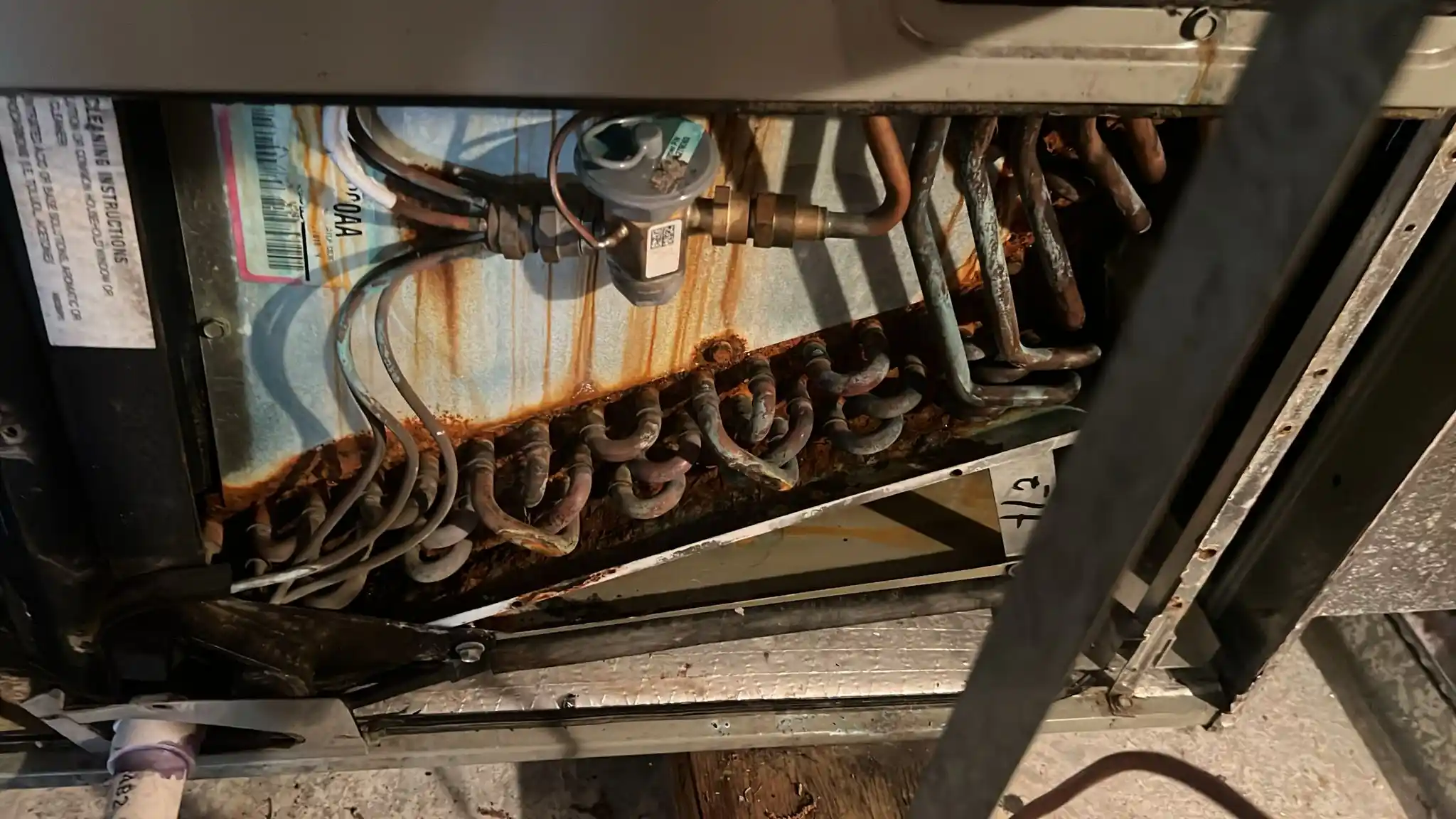
Can You Repair AC Coil Leak?
Wondering can you repair ac coil leak issues in in your home? Yes, a professional can repair a small pinhole leak in an accessible copper coil. However, severe corrosion, multiple leaks, or older systems often require full coil replacement to ensure long-term reliability.
Quick Answer: Can you repair ac coil leak?
Yes, a professional can sometimes repair a small, accessible AC coil leak, especially when the damage is isolated and the rest of the coil is sound. However, widespread corrosion, multiple leaks, an old R-22 system, or repeated refrigerant loss usually makes coil replacement or full system replacement more reliable. Do not simply add refrigerant without finding and repairing the leak.
Whether a technician can perform a patch repair on your cooling system depends primarily on the location of the leak, the metal composition of the copper or aluminum tubing, and the overall physical condition of the surrounding fins.
Evaporator Coil vs. Condenser Coil: What Is Leaking?
Understanding whether your refrigerant leak is located in the indoor air handler or the outdoor cabinet helps set realistic expectations for repair complexity.
Where the Evaporator Coil Is Located
The evaporator coil sits inside your home, mounted within the indoor air handler or attached directly above the furnace in your closet, garage, or attic.
Where the Condenser Coil Is Located
The condenser coil wraps around the interior of your outdoor condenser unit, where it releases heat absorbed from your home into the outside air.
Why Indoor Coils Corrode
Indoor evaporator coils are constantly exposed to moisture, volatile organic compounds (VOCs) from household cleaners, and humidity, which can cause micro-corrosion.
Why Outdoor Coils Suffer Physical Damage
Outdoor condenser coils face harsh environmental threats, including hail, falling branches, lawnmower debris, pet urine, and extreme weather exposure.
How to Describe the Leak to a Technician
When calling an ac repair service, describe whether you hear a hissing sound indoors near the air handler or outside by the condenser and whether you notice ice formation.
AC Coil Leak or Condensate Leak?
Before assuming you have a costly refrigerant leak, determine whether the fluid leaking from your unit is liquid water or escaping refrigerant gas.
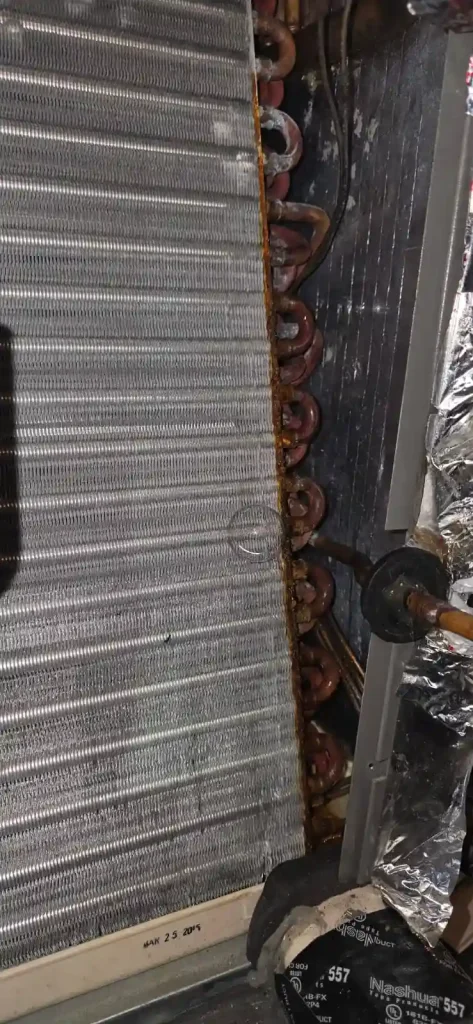
The Most Common Causes of AC Coil Leaks
Refrigerant coils operate under continuous high pressure and temperature fluctuations. Several factors can cause metal degradation over time.
Formicary Corrosion
Formicary corrosion occurs when organic acids from household chemicals, paints, and air fresheners combine with moisture on the indoor coil, forming microscopic pits in copper tubing.
Galvanic Corrosion
Galvanic corrosion develops when dissimilar metals (such as copper tubing in contact with aluminum fins or steel brackets) react in the presence of moisture.
Vibration and Thermal Cycling
Daily expansion and contraction from normal heating and cooling cycles can wear down solder joints and cause stress fractures near copper elbows.
Lawn Equipment or Hail Damage
Outdoor condenser coils can suffer mechanical damage from flying rocks thrown by lawnmowers, weed trimmers, or severe hail storms.
Chemical Exposure and Indoor VOCs
Off-gassing from new furniture, carpeting, and cleaning products accumulates in tightly sealed homes, accelerating surface chemical wear on aluminum and copper.
Poor Airflow and Repeated Freezing
Infrequent air filter changes starve the coil of airflow, causing it to freeze repeatedly. Expanding ice deforms delicate aluminum fins and copper tubes.
Signs Your Home AC Has a Refrigerant Leak
When evaluating your system for leaks, watch for these common performance indicators:
- Warm Air Currents: Air blowing from supply registers feels lukewarm rather than cold.
- Hissing or Bubbling Sounds: Pressurized gas escaping through pinholes creates audible sounds near the indoor or outdoor unit.
- Ice Accumulation: A continuous layer of frost forms across the indoor evaporator coil or the outdoor copper line.
- Higher Utility Costs: The compressor runs continuously to reach your thermostat setpoint, spiking electric bills.
- System Short Cycling: Low-pressure safety switches shut down the compressor prematurely to prevent internal mechanical damage.
If you notice ice forming on your lines or warm air blowing from your vents, knowing the expected cost to repair a leaking AC will help you budget for the necessary professional service.
What to Do Immediately When Your AC Coil Leaks
If you suspect a coil leak or notice ice buildup on your refrigerant lines, follow these safety steps:
Turn the System Off If It Is Freezing
Switch your thermostat from “Cool” to “Off” immediately. Running a frozen unit can burn out the compressor motor.
Do Not Keep Topping Off Refrigerant
Adding refrigerant without repairing the physical leak is illegal under EPA regulations and wastes money, as the chemical will escape again.
Replace a Visibly Dirty Filter
Ensure clean airflow across the coil to prevent icing while waiting for your service appointment.
Protect the Area From Water Damage
Place towels or buckets beneath the indoor air handler to catch melting ice and prevent drywall damage.
Schedule Professional Leak Detection
Contact a licensed technician equipped with electronic detectors to locate the exact leak source.
How HVAC Technicians Find a Coil Leak
Professional technicians use specialized equipment to pinpoint micro-leaks without causing further damage to delicate fins.
Visual Inspection and Oil Residue
Refrigerant carries synthetic compressor oil throughout the system. Technicians check for dark, oily spots along copper bends and solder joints.
Electronic Leak Detector
Handheld electronic “sniffers” detect microscopic halogen or hydrocarbon molecules escaping from pressurized tubing.
Bubble Solution
Applying a high-viscosity soap solution to suspected copper joints produces visible bubbles where gas escapes under pressure.
UV Dye Testing
Injecting a fluorescent dye into the refrigerant line allows technicians to locate leaks using ultraviolet inspection lamps.
Nitrogen Pressure Testing
Evacuating remaining refrigerant and pressurizing the isolated coil with dry nitrogen isolates pressure drops caused by hidden leaks.
Vacuum and Standing-Pressure Test
A deep vacuum test verifies whether the repaired coil holds pressure over time without vacuum decay.
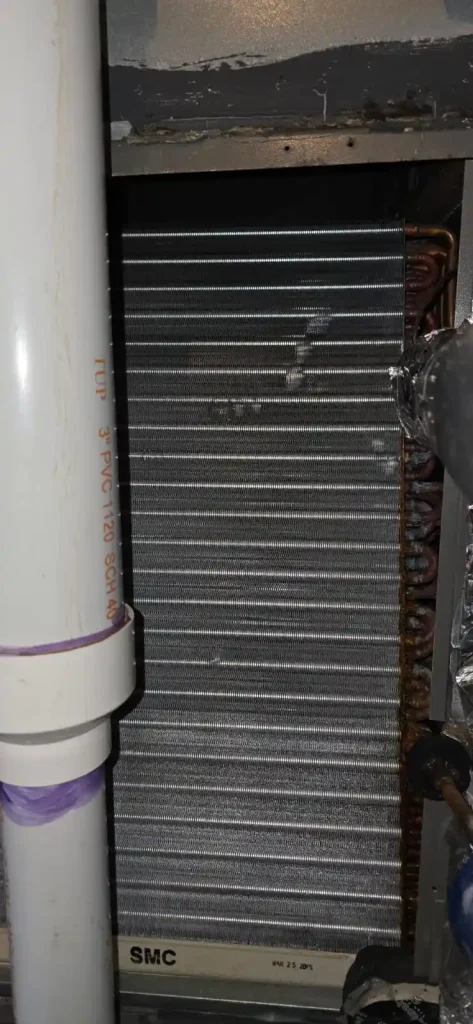
How a Professional Repairs a Small Coil Leak
When asking can you repair ac coil leak damage, understanding the technical repair process helps you evaluate repair estimates:
- Refrigerant Recovery: The technician recovers remaining refrigerant into an EPA-approved recovery cylinder.
- Surface Preparation: The damaged copper section is cleaned using wire brushes and flux to remove oxidation.
- Brazing the Leak: Using an oxy-acetylene torch and silver-bearing brazing alloy, the technician seals the pinhole under a nitrogen purge.
- Pressure Verification: The system is pressurized with nitrogen to confirm the seal holds under working pressures.
- Evacuation & Recharge: A vacuum pump removes moisture, and the unit is recharged with the exact factory refrigerant weight.
Note that attempts to patch aluminum coils or microchannel heat exchangers with low-temperature solder often fail due to oxidation of the metal.
When Coil Replacement Is Better Than Repair
Patching a coil is not always practical. Use this decision guide to determine the best path forward for your home:
When evaluating major system options, homeowners often ask how AC compressor repair work compares to coil replacement or wonder if they can repair AC condenser coils directly. While isolated copper lines on condenser coils can be brazed, microchannel aluminum condenser coils usually require full replacement.
Knowing how to Tell If AC is broken helps catch minor pressure drops before major component damage occurs. If your House Air Conditioner Not Cooling persists after basic troubleshooting, professional pressure testing is essential.
2026 AC Coil Leak Repair Costs in Texas
Repair pricing varies based on system accessibility, refrigerant type, and whether components are covered under manufacturer warranty.
+------------------------------------+------------------------------------+----------------------------------+
| Service Type                       | Estimated Texas Price Range        | Cost Variables                   |
+------------------------------------+------------------------------------+----------------------------------+
| Diagnostic Visit & Leak Detection  | $150 – $550                        | Nitrogen test, electronic sniffer|
+------------------------------------+------------------------------------+----------------------------------+
| Spot Brazing Repair (Copper)       | $300 – $1,500                      | Accessibility, labor hours       |
+------------------------------------+------------------------------------+----------------------------------+
| Refrigerant Recharge (Post-Repair) | Varies by type and quantity        | R-410A vs. newer low-GWP blends  |
+------------------------------------+------------------------------------+----------------------------------+
| Evaporator Coil Replacement        | $1,000 – $3,200                    | Tonnage, indoor accessibility    |
+------------------------------------+------------------------------------+----------------------------------+
| Condenser Coil Replacement         | $1,000 – $4,500                    | Outdoor cabinet size, brand      |
+------------------------------------+------------------------------------+----------------------------------+
Your overall air conditioner coil leak repair cost depends heavily on whether the leak is accessible or hidden deep inside an attic air handler.
Warranty, Refrigerant, and System-Age Considerations
Before authorizing a repair, check your original equipment installation paperwork:
- Manufacturer Parts Warranty: Most major brands (Carrier, Trane, Lennox, and Goodman) offer 5- to 10-year functional parts warranties covering replacement coils.
- Labor Warranties: Labor for installing warranty parts is typically covered only during the first 1 to 2 years unless an extended labor agreement was purchased.
- Refrigerant Regulations: Older systems operating on phased-out R-22 carry higher recharge costs compared to modern R-410A or newer R-454B systems.
Houston, Dallas, Austin, and San Antonio Examples
Texas climates impose unique regional stresses on cooling equipment:
- Houston & Coastal Regions: High relative humidity and airborne salt near coastal areas cause rapid exterior rust and copper oxidation, making full coil replacement more common.
- Dallas–Fort Worth: Air handlers installed in hot attics operate under high ambient heat, where thermal expansion increases stress on solder joints.
- Austin & Central Texas: High spring pollen and limestone dust clog indoor coils, causing restricted airflow that leads to coil freezing and joint strain.
- San Antonio: Extended summer operating hours keep systems running continuously, accelerating general mechanical wear on aging equipment.
Why DIY Sealants and Refrigerant Top-Offs Can Fail
It can be tempting to try quick DIY fixes, but chemical sealants and unverified top-offs often cause more harm than good:
- Gunking Internal Expansion Valves: Chemical ac coil leak sealer products react with moisture and oxygen, hardening into solid residues that plug expansion valves (TXVs) and capillary tubes.
- Compressor Damage: Chemical additives can alter synthetic oil viscosity, causing bearing friction inside the compressor.
- Illegal Venting: EPA Section 608 regulations strictly prohibit releasing fluorocarbon refrigerants into the atmosphere during DIY repair attempts.
How to Prevent Future Coil Leaks
While chemical corrosion cannot be stopped entirely, routine maintenance reduces system strain and extends component life:
- Change Air Filters Monthly: Clean filters maintain steady airflow, preventing cold temperatures that cause coils to freeze.
- Schedule Annual Maintenance: Have a licensed technician inspect indoor and outdoor coils, flush condensate pans, and check electrical connections twice per year.
- Rinse Outdoor Coils: Gently spray leaves, grass clippings, and dirt off your outdoor condenser unit using a low-pressure garden hose.
- Improve Indoor Air Quality: Reduce indoor VOC concentrations by using low-VOC paints and ensuring adequate fresh air ventilation.
FAQ
Is an AC coil leak worth repairing?
Repairing a coil leak is worth it if your system is under 8 years old, uses copper coils, has a single accessible pinhole, and holds a valid warranty. If the coil has multiple leaks or extensive corrosion, replacement is safer.
How long does a repaired AC coil last?
A spot-brazed copper coil repair can last several years if the surrounding metal is healthy. However, if the leak was caused by widespread formicary corrosion, new leaks will likely form nearby within 6 to 12 months.
How do I know if my AC leak is freon or water?
Refrigerant leaks escape as invisible gas (sometimes leaving an oily residue) and cause warm air or ice buildup. Water leaks pool liquid around your indoor unit without immediate ice formation.
Book an AC Leak Diagnosis With 24sevenac
If your air conditioner is blowing warm air, making hissing noises, or freezing up, do not let a minor leak turn into a complete compressor breakdown.
At 24sevenac, our licensed Texas HVAC technicians specialize in precision leak detection, brazing repairs, and coil replacements. We serve homes across Houston, Katy, and surrounding communities with upfront pricing and reliable service.
Call 24sevenac today or schedule your AC leak diagnostic appointment online!