Will heat pumps work in cold climates? Often, yes—but comfort depends on more than the unit’s label. A heat pump moves heat indoors in winter and reverses for cooling. As outdoor temperatures fall, output and efficiency can change. Correct sizing, airflow, controls, and backup planning matter.
Texas has hot summers and generally mild-to-cool winters, but conditions vary from the Gulf Coast to the Panhandle. A Houston design may not suit an exposed North Texas home. This guide covers equipment choices, retrofit checks, costs, incentives, and installer questions.
Will Heat Pumps Work in Cold Climates?
Will heat pumps work in cold climates? Yes—when correctly sized and installed. Check insulation, air leakage, ducts, electrical capacity, and model output at local winter temperatures. ENERGY STAR tests cold-climate models at 5°F, but that label does not guarantee comfort in a specific home. In Texas, compare ducted, ductless, and dual-fuel options before deciding on backup heat.
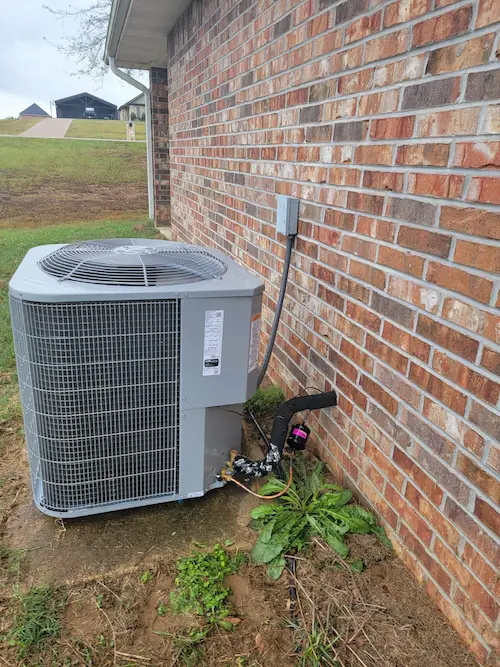
A heat pump moves heat indoors in winter and reverses the process for cooling. Output and efficiency can change as outdoor temperature falls, so the nameplate alone cannot confirm comfort in your house. Sizing, airflow, controls, and backup planning matter.
Texas has hot summers and mild-to-cool winters, but conditions vary from the Gulf Coast to the Panhandle and West Texas. A Houston design may not fit an exposed North Texas home. This guide covers technology, retrofits, budgets, incentives, and installer questions.
Why Modern Heat Pumps Handle Cold Better
Earlier heat pumps often lost more heating output as outdoor temperatures fell. Newer cold-climate models can maintain useful capacity over a wider range, but performance remains model-specific. Compare the exact equipment’s low-temperature output with the home’s design load, including how the system handles defrost and backup operation.
Variable-speed compressors
A variable-speed compressor adjusts output rather than switching only between full power and off. It can run lower during mild weather and ramp up as demand rises, within the manufacturer’s limits. This can support steadier comfort, but it cannot fix poor sizing, blocked airflow, leaky ducts, or a model whose low-temperature capacity is too small.
Hyper-Heating INVERTER (H2i): read the model data, not the label
“Hyper-Heating INVERTER,” sometimes shortened to H2i, is a branded cold-weather phrase used in the market. Treat it as a product-family label, not independent proof of performance. Ask how many Btu per hour the proposed matched system can deliver at your location’s winter design temperature and whether that output covers the home’s calculated load.
What “overspeeding” means—and does not mean
“Over-speeding” is sometimes used informally for an inverter compressor increasing its speed as demand rises or outdoor air gets colder. The equipment is designed to modulate within a specified operating range, not beyond it. Ask for capacity and efficiency data at relevant temperatures; a higher compressor speed does not guarantee full output or efficient operation at every temperature.
Cold-climate certification
ENERGY STAR’s cold-climate criteria include third-party low-temperature testing at 5°F. Certified systems can continue operating below that point, and backup heat may be useful in colder conditions. The test does not prove that a particular model can meet every home’s load. Check the exact model’s performance table against the local design temperature and Manual J calculation.
What ACHR News adds
ACHR News’ October 2026 industry coverage describes improvements in compressors, controls, and cold-weather system design. The article is sponsored industry coverage, so use it for technology context, not as an independent comparison or savings guarantee. For a purchase decision, prioritize certified model data, a documented load calculation, and a written installation scope.
For a homeowner-friendly comparison of staging options, see Heat Pump Single Stage vs Two Stage before weighing the upfront price against comfort and expected operation.
What Actually Determines Heat Pump Success in Cold Weather
A heat pump depends on the whole house: insulation, windows, air leakage, ducts, electrical capacity, local weather, and controls. A good proposal measures those conditions rather than assuming every older home needs a larger unit, new ducts, or a 200-amp panel.
| Factor | What to check | Why it matters |
| Heating and cooling loads | Manual J using construction and local conditions | Avoids sizing from floor area or old equipment alone |
| Envelope | Air leaks, attic insulation, windows, planned upgrades | Changes how much heat the system must supply |
| Ducts | Size, leakage, insulation, airflow | Affects comfort and delivered capacity |
| Electrical capacity | Household load, breaker space, backup heat | Determines circuits and possible upgrades |
| Cold-weather operation | Output at design temperature, defrost, controls | Shows whether the winter plan meets demand |
Manual J load calculation
ACCA Manual J estimates a home’s heating and cooling needs using details such as insulation, windows, air leakage, room dimensions, and local design conditions. Ask for the calculation or a summary of its inputs. Square-foot rules are only a starting point; two homes of the same size can need different equipment.
Air sealing and insulation
Envelope improvements can change the heating load and the equipment size. Tell the installer about planned attic work before sizing; the calculation should reflect either existing conditions or a clearly stated post-upgrade scenario. GreenCalcs’ sizing guidance also notes that insulation and air sealing affect capacity needs, but its rules of thumb are not a final system selection.
Ductwork condition
Existing forced-air ducts may be reusable, but they should be checked for leakage, insulation, sizing, and airflow. Ask whether the quote includes testing, sealing, balancing, or repairs. The fact that a furnace once used the ducts does not show that they meet the new heat pump’s airflow requirements.
Electrical panel capacity
Amperage alone does not determine panel adequacy. Review household loads, proposed equipment, breaker space, auxiliary heat, wiring, and code. A 100-amp service may suit one home but not another. PNNL’s panel calculator says its estimate does not replace a licensed electrician’s evaluation.
Climate and backup heat
NOAA describes Texas as having hot summers and mild-to-cool winters, with January daily minimums varying from around 20°F in the Panhandle to around 50°F near the Rio Grande’s mouth. These climate-summary values are not local design temperatures. Match model capacity and backup plans to the specific address and building load.
For durability questions, how long should heat pump last covers expected service life. Do not replace a functioning system only to meet a generic age milestone.
Air Sealing and Insulation: The First Step
Envelope work does not have to become a full renovation before a heat pump can be installed. Start by identifying major leaks and insulation gaps, then decide which improvements are safe and likely to change the home’s load. If a heater has failed during a cold snap, safe replacement may be urgent; document current conditions and planned upgrades so the equipment calculation stays transparent.
Air sealing: caulk, weatherstrip, and rim joists
Common leakage paths include attic bypasses, gaps around wiring and plumbing, doors and windows, and rim joists. An energy audit can help prioritize them. Use materials suited to the location and code; do not cover hot flues, electrical equipment, or ventilation openings with ordinary foam or insulation. Sealing should account for ventilation and combustion safety.
Attic insulation: R-49 to R-60 is not universal
R-value measures resistance to heat flow, but the right target depends on climate zone, existing insulation, attic design, and code. R-49 to R-60 may be a planning range in some upgrades, not an automatic Texas requirement. Measure existing insulation first, and address significant air bypasses before adding material.
Basement and crawlspace insulation
Some Texas homes have crawlspaces or raised floors rather than basements. Check for moisture, exposed ducts, plumbing risks, and the floor assembly before insulating. The correct location depends on construction and water management; work in the wrong place can trap moisture or leave pipes vulnerable.
Blower-door test and energy audit
A blower-door test measures air leakage under controlled pressure and can help locate leaks. It is useful when rooms are drafty or the heat-pump design depends on planned sealing. It does not identify every repair or guarantee payback, so pair the result with an energy audit and a load calculation. ENERGY STAR also advises combustion-safety checks for homes with fuel-burning appliances and warns against disturbing possible vermiculite insulation.
Ductwork: Reuse, Repair, or Go Ductless?
Many ducted heat pumps can connect to existing U.S. forced-air ducts. Whether reuse makes sense depends on sizing, leakage, insulation, and room airflow. If ducts are missing or difficult to repair, a ductless mini-split is another option. Compare whole-home comfort and project scope rather than choosing by equipment price alone.
Existing ducts in decent shape
Ducts may be reusable when properly sized, tight, insulated where needed, and balanced. Ask the contractor to verify airflow against the selected model and state whether testing, sealing, and balancing are included. If the bid only reconnects old ducts, ask what evidence shows that no correction is needed.
Leaky or undersized ducts
Leaks can send conditioned air into attics or crawlspaces, while undersized runs restrict airflow. A new heat pump will not fix either problem automatically. Ask for test findings, the repair method, and a post-work check. If full replacement is proposed, request the reasons and compare targeted repairs where feasible.
No ductwork: understand the existing heat source
Ductless mini-splits heat and cool room air without central ducts. Older American homes may also use boilers, radiators, or baseboards; a standard air-to-air mini-split does not connect to a radiator loop. Treat the existing system as a separate design question rather than applying European boiler guidance to a U.S. retrofit.
For a broader retrofit overview, do heat pumps work in older houses explains why age alone does not decide compatibility.
Ductless Mini-Splits: The Best Option for Many Old Homes
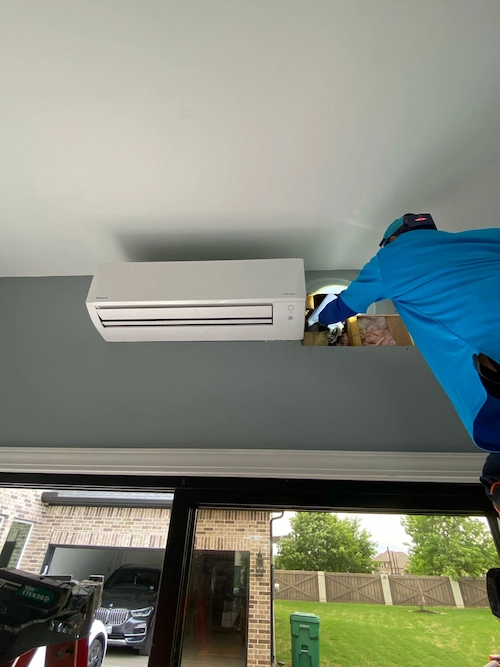
A ductless mini-split can suit a home with no ducts or ducts that are costly to repair. An outdoor unit connects to indoor heads that serve rooms or zones. It can avoid extensive duct installation, but it is not automatically the right choice for every home. Room layout, head placement, line routing, condensate drainage, and total heating load all need review.
Single-zone versus multi-zone
A single-zone system may serve an addition or frequently used room. A multi-zone system serves more rooms, but each head and the total outdoor-unit capacity must be sized. A head in a central living room may not heat a closed bedroom well. Ask for room-by-room loads and a plan for airflow between rooms.
Wall-mounted, ceiling, and floor units
Wall, ceiling, and floor units can fit different rooms. Plaster, built-ins, trim, and narrow wall bays in older homes affect placement and line routing. Confirm where refrigerant and drain lines will run, how openings will be finished, and whether the outdoor unit has the required clearance.
Zoning for older homes
Zoning does not guarantee comfort in rooms without an indoor head. PNNL notes that some rooms need a return-air path or air-transfer approach. Ask how conditioned air reaches each space and how closed doors affect it. Frequent shutdown of multi-zone heads can also affect system operation.
No ductwork needed—but sizing still matters
Ductless systems still require proper sizing. ENERGY STAR recommends Manual J for heat pumps, and PNNL recommends sizing the total system and each zone. Oversized equipment can cycle more often and reduce comfort or humidity control.
Electrical Panel: Will It Handle a Heat Pump?
Heat pumps need electrical circuits, and resistance backup can add substantial load. Have a qualified electrician review the equipment, household demand, panel, wiring, and local code before assuming an upgrade is necessary. A 200-amp panel is not a default requirement, and 100 amps is not automatically enough.
100-amp versus 200-amp service
Some 100-amp homes can support a heat pump; others have limited capacity because of electric ranges, water heaters, vehicle chargers, or backup heat. Panel space and total service capacity are related but separate issues. Ask whether the recommendation is for a circuit, panel replacement, service upgrade, or utility-side work.
Load calculation for the heat pump
Use the proposed equipment’s electrical ratings, household loads, backup heat, and planned appliances. PNNL’s calculator is only an estimate and does not replace a licensed electrician. Get the assumptions and code basis in writing; avoid both an unsupported upgrade and a refusal based only on amperage.
Panel upgrade cost: a planning range
A $1,500–$4,000 allowance is useful for budgeting, not a fixed heat-pump surcharge. HomeGuide lists costs that vary by amperage and scope, with some upgrades reaching $4,000. Service changes, new wiring, permits, utility coordination, and access can alter a local quote. Ask for the reason and itemized price.
Load-management devices
An electrician may consider approved load-management controls when the issue is peak demand. Suitability depends on code, equipment, utility rules, and circuits. It is not a do-it-yourself substitute for adequate wiring. Ask the electrician to compare options and document any limits on backup heat or other appliances.
Backup Heat and Dual-Fuel Options
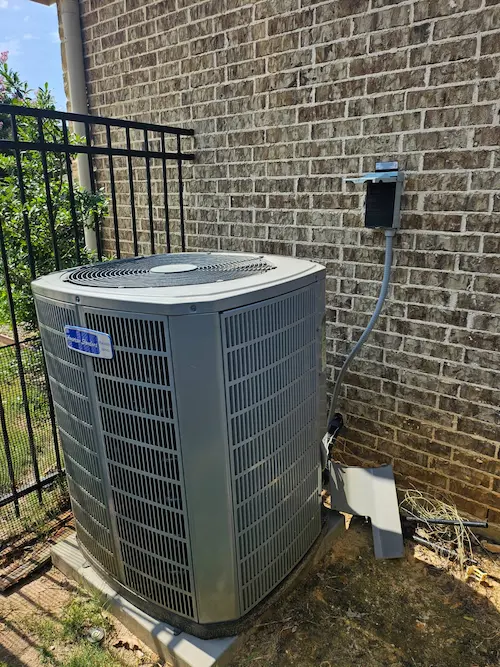
Backup heat is a design choice, not proof that heat pumps fail in cold weather. Homes may use electric resistance strips or pair a heat pump with an existing gas furnace. The right approach depends on local winter conditions, the model’s output curve, energy prices, electrical service, and the controls that switch heat sources.
Electric resistance backup
Resistance elements can provide heat when needed, but they use electricity directly and may increase peak demand and operating cost. Ask when the backup activates, whether it can run with the compressor, and how the panel supports the load. The control plan should balance comfort, equipment limits, and energy use.
Dual-fuel with an existing furnace
A dual-fuel system pairs a heat pump with a compatible gas furnace. The controls select the heat source under different conditions. Confirm the furnace’s condition, system compatibility, changeover temperature, and control sequence before assuming the old furnace can remain.
When backup heat is needed in Texas
A Houston home and a Panhandle home can face different winter loads. Base the backup plan on local design conditions and heat-pump capacity at that temperature. ENERGY STAR notes backup heat can be useful in colder conditions, but a product label alone does not set the changeover point for a particular house.
If the current heater has a persistent odor, do not treat it as a cold-weather performance issue. The guide Heater Smell Like It’s Burning covers safer next steps.
Texas-Specific Considerations: Hot Summers, Mild Winters
Texas homes need strong cooling for hot summers and reliable heating during cold snaps. A heat pump serves both modes, so its design should consider summer capacity and humidity as well as winter output. NOAA notes broad east–west differences in Texas climate, shaped partly by Gulf moisture and winter air patterns. One statewide equipment recipe will not fit every location.
In humid areas, correct sizing, airflow, and controls affect moisture removal during cooling. In colder or wind-exposed areas, low-temperature capacity and backup planning may matter more. Ask the contractor to state local design assumptions instead of repeating a neighbor’s equipment choice or relying on a statewide average.
Houston, Dallas, Austin, and San Antonio Examples
These are planning prompts, not city-specific price or performance guarantees. A home’s attic, ducts, electrical loads, and utility territory can matter as much as its city. Check offers by service address and confirm that the proposed equipment and contractor meet current program rules.
| Area | Questions to ask | Practical focus |
| Houston and Katy | Were ducts, humidity, and attic access assessed? | Check cooling and airflow as well as winter heat. |
| Dallas–Fort Worth | What is output at local design temperature? | Review backup heat and the serving utility’s program. |
| Austin and Round Rock | Does the bid meet Manual J, permit, and rebate rules? | Verify matched equipment and eligibility. |
| San Antonio | What replacement and efficiency tier applies? | Check current CPS Energy rules before budgeting. |
| West Texas | How do wind, dust, and colder nights affect placement? | Use address-specific conditions, not statewide averages. |
24sevenac’s published heating page describes service in Houston, Katy, and surrounding communities. Homeowners elsewhere in Texas should confirm local availability before requesting a visit.
How Much Does a Heat Pump Cost in an Older Home?
Price depends on system type, house size, matched equipment, labor, permits, and any duct, electrical, or envelope work. GreenCalcs’ October 2026 calculator lists $12,000–$22,000 for a typical ducted air-source installation and $8,000–$18,000 for a multi-zone mini-split. It also notes that colder climates may require larger cold-rated equipment. Treat these as broad U.S. estimates, not Texas quotes.
| Project item | Planning range | How to interpret it |
| Whole-home ductless mini-split | $10,000–$20,000 | GreenCalcs’ broad benchmark is $8,000–$18,000; added zones or scope may raise cost. |
| Ducted cold-climate heat pump | $14,000–$24,000 | GreenCalcs lists $12,000–$22,000 for a typical ducted system; the higher range is not a Texas average. |
| Air sealing plus attic insulation | $2,000–$6,000 | Attic size, old insulation removal, and repairs change the total. |
| Electrical panel or service work | $1,500–$4,000 | Amperage, wiring, permits, and utility work determine the scope. |
These are planning bands, not GreenCalcs’ exact outputs. An Austin cost guide reports attic insulation averaging $2,060 (commonly $1,668–$2,453) and air sealing at $250–$740; removal or repairs can add cost. HomeGuide lists panel-upgrade prices that vary by amperage and can reach $4,000.
For another local price overview, read how much is a heat pump for a house. Compare the project scope in writing, not just the headline estimate.
What changes the final quote?
Older homes may need duct repairs, new circuits, an air handler, controls, drainage, or difficult attic work. Ask for model numbers, matched-system documentation, low-temperature capacity, labor, permits, disposal, startup, warranty, and exclusions. Separate required upgrades from optional work and require written prices for changes discovered after installation starts.
For multi-zone systems, verify each room’s coverage and total capacity.
Compare quotes on the same basis
Get two or three itemized proposals when timing and safety allow. Compare the same model scope, Manual J assumptions, duct and electrical work, backup heat, permits, warranty, and startup checks. A cheaper bid may leave out items that another includes. Do not judge value by tonnage, brand, or monthly payment alone.
Rebates and Financing in Texas (2027)
Do not assume a federal credit will reduce a 2027 invoice. The IRS says Section 25C does not apply to property placed in service after December 31, 2025; Section 25D also ended for qualifying expenditures after that date. Confirm current rules with the IRS or a tax professional before making a financial decision.
Texas’ SECO page, updated August 21, 2026, said HOMES and HEAR rebates were not yet available and remained in planning and design pending federal approval. Do not include a state rebate in a project budget unless Texas publishes an active program and eligibility rules.
| Program checked November 2026 | Published status or amount | Homeowner action |
| Federal 25C/25D credits | Ended for post-2025 installations or qualifying expenses | Confirm any law change before purchase. |
| Texas HOMES/HEAR | Not available; state reported planning and design phase | Check SECO for a formal launch. |
| CenterPoint, Houston area | Incentives listed from $200 for eligible systems | Confirm customer and contractor eligibility. |
| Austin Energy | Heat-pump tiers listed at $650, $750, and $950 | Check equipment, replacement, and permit rules. |
| CPS Energy, San Antonio | $90–$310 per ton listed for heat pumps | Confirm current program year and application steps. |
Utility offers are not guaranteed for 2027. CenterPoint, Austin Energy, and CPS Energy publish separate service-area and equipment conditions. Verify the account territory, approved contractor, qualifying model, deadline, and permit rules before signing; do not subtract a rebate until eligibility is confirmed.
Financing changes payment timing, not total project cost. Compare APR, fees, term, deferred-interest rules, prepayment terms, and the cash price. An advertised monthly amount may depend on a particular term or dealer fee, so ask for the full written terms.
Common Mistakes to Avoid
Do not buy the largest system “to be safe” or copy the old furnace’s capacity without checking the home’s current condition and the new unit’s winter performance. Oversizing can create short cycles and weaker humidity control; undersizing may leave the home relying heavily on backup heat. Ask for the load calculation and the model data behind the recommendation.
A certification badge, brand name, or single efficiency number does not show the output at every outdoor temperature. Confirm the exact indoor and outdoor model match, AHRI reference, low-temperature capacity, and commissioning plan. Likewise, do not assume a mini-split will heat every room without a design for head placement and air movement.
Treat savings claims and rebates as estimates until they reflect your utility rates, bills, equipment, and written eligibility. A needed repair need not wait for a full renovation, but make assumptions visible and avoid unsupported equipment or upgrades.
FAQ: Heat Pumps in Cold Climates
Do heat pumps work in cold weather?
Yes. Many modern air-source heat pumps provide heat in cold weather, but output and efficiency vary by model and temperature. Check performance at local winter conditions, not just nominal capacity. Correct sizing, airflow, controls, and backup planning still matter.
Why do heat pumps struggle in cold weather?
As outdoor temperatures fall, a heat pump may deliver less heat while the home needs more. Cold-climate models can maintain more capacity, but performance is model-specific. Leaky ducts, blocked coils, or control faults can also cause discomfort, so do not assume weather is the only cause.
What is a cold climate heat pump?
It is an air-source unit designed and tested for useful heating at lower outdoor temperatures; “cold weather heat pump” is another common search phrase for it. ENERGY STAR’s cold-climate criteria include third-party verification at 5°F. Review the exact model’s capacity curve and decide whether the home needs backup heat.
Do I need backup heat in Texas?
Not every Texas home needs the same backup plan. Consider local design temperature, heat loss, model output, and electrical service. Options may include electric resistance heat or a compatible gas furnace. Ask the installer to document the controls and changeover point.
Can I install a heat pump in an older house without ducts?
Often, yes. A ductless mini-split can serve one or more zones without central ducts. Each room still needs suitable sizing and air distribution. A standard air-to-air mini-split does not connect to an existing radiator loop.
Will I need a 200-amp electrical panel?
Not necessarily. Adequacy depends on household loads, available circuits, the heat pump, backup heat, and code. Have a licensed electrician calculate the load and itemize any recommended upgrade.
Book a Heat Pump Consultation With 24sevenac
A consultation should cover the home’s load, ducts, electrical capacity, low-temperature performance, and an itemized estimate. Confirm warranty, permits, startup checks, and utility-incentive eligibility before authorizing work.
For Houston, Katy, and surrounding Greater Houston communities, heating service covers central heat pumps, ductless mini-splits, and hybrid systems according to the published service page. Contact 24sevenac to confirm local availability and request a consultation.