Why Does My Heater Smell Like It’s Burning? A faint, dusty odor during the first heating cycle after months off can be temporary. A smell like hot plastic, electrical insulation, rotten eggs, or smoke is different: turn the system off only if safe. Leave immediately if you smell gas, see smoke or flames, or feel unsafe. This guide explains what Texas homeowners can check without opening equipment and when to call 911, the gas utility, or a qualified HVAC professional.
Is a Burning Heater Smell Normal?
A brief dusty smell at first heating after months off is often normal and may fade within minutes to a few hours . A burning-plastic, electrical, sulfur, gas, or smoke smell is not normal. For gas, leave immediately and call the utility from outside. For other persistent odors, turn off the heater if safe and contact a qualified HVAC professional.
What changes the answer?
A mild odor that fades differs from a pungent smell that persists, returns, or grows stronger. Note where it is strongest—a room, vent, outlet, or equipment cabinet—but do not dismantle anything. If you cannot tell dust from hot plastic, shut down the heater if safe and ask a qualified professional.
Why Does My Heater Smell Like It’s Burning? Start With Safety
The answer depends on the odor, when it began, whether it is fading, and whether other warning signs appear. A light dusty smell at seasonal startup is often temporary. A persistent or intensifying plastic, electrical, rubber, or sulfur smell is not something to test by leaving the heater running. Smoke, sparks, flames, a carbon-monoxide (CO) alarm, or anyone feeling ill calls for immediate action.
If you are asking, “is burning smell from heater dangerous?”, treat the odor as a clue—not a safety test. Turn off the heater only when there is no suspected gas leak and the normal control is safe to reach. Do not open the furnace cabinet, touch wiring, test gas connections, or remove a motor panel. If you smell gas, see smoke, or feel at risk, leave first and call from outside.
Evacuate before troubleshooting when
The smell is rotten eggs or sulfur; smoke, sparks, or flames are visible; a CO alarm sounds; or anyone has headache, dizziness, weakness, nausea, chest pain, or confusion. Get outside and call 911 where appropriate. For a gas odor, do not operate switches, appliances, or phones inside. Emergency instructions are detailed below.
Identify the Smell Before You Take Action
Use this chart for triage, not diagnosis. Similar smells can come from different faults or another appliance. A strong or worsening odor, smoke, sparks, alarms, or symptoms should move you straight to the safety steps. Carrier distinguishes common dust, plastic, electrical, oily, and sulfur odors, but a technician must confirm the source.
| What you notice | Possible source—not a diagnosis | Urgency | Safer next step |
| Mild dusty or lint-like odor at first seasonal use | Dust on warm parts or in the air path | Often low if brief and fading | Monitor from a safe distance; check an accessible filter after shutdown |
| Hot plastic, electrical, or fishy odor | Overheating wire, motor, control, appliance, or nearby plastic | High | Stop suspected equipment if safe; call HVAC/electrical professional; evacuate for smoke or sparks |
| Rotten eggs or sulfur | Odorant added to natural gas; possible leak | Emergency | Leave; avoid switches and phones indoors; call 911 and the utility from outside |
| Burning rubber, oily, or gunpowder-like odor | Possible motor, belt, burner, wiring, or debris issue | Prompt inspection; emergency if smoke/fire | Turn off if safe; do not restart to test |
| Musty or damp odor | Moisture, filter, coil/drain issue, or possible mold nearby | Inspect if persistent | Look for moisture safely; seek help if HVAC contamination is suspected |
Burning Dust: The Common First-Use Smell
Seasonal dust and first use
Why dust accumulates during summer
A furnace that sits unused can collect dust and lint on warm surfaces or in its air path. When heating starts, those deposits may create a dry, dusty odor at the vents. Pets, renovation work, open windows, and infrequent filter checks can add to household dust. A typical first-use smell should be mild and become less noticeable as the system runs.
How long the smell should last
Carrier says this dust odor may last about 30 minutes to a few hours, while American Standard describes it as lasting only a few minutes . Treat both as approximate guidance, not a safety deadline: the smell should be mild and fade. Smoke, electrical odor, or a smell that grows overrides the clock; shut down if safe and call a technician.
When dust smell becomes abnormal
A dusty odor that returns at every heating cycle, lasts through repeated runs, or comes with weak airflow deserves attention. A clogged filter or debris in a vent is possible, but so are other equipment issues. Note the affected room or register; do not insert tools or hands into vents. If you cannot distinguish dust from plastic, stop using the heater if safe and ask for advice.
Burning Plastic or Electrical Smell: Turn It Off
Common equipment sources
Motor, wiring, or control problem
People searching “heater smells like burning plastic” may be noticing an overheated motor, damaged wire insulation, or failing control. Smell alone cannot identify the failed part. Carrier and Trane recommend shutting down a heater when a plastic or electrical odor appears to come from the HVAC system and arranging qualified inspection.
Foreign plastic or debris near a vent
An object near a heat source or a separate appliance may also create a plastic odor. Do not reach into a vent or open equipment to look for it; tell the technician where the smell is strongest.
If the odor is strongest at an outlet, switch, or electrical panel, house wiring may be involved. ESFI lists burning odors, flickering or dimming lights, discolored switches, and warm outlets as possible warning signs . Do not touch a warm outlet or open a panel. If smoke or sparks appear, evacuate and call 911.
Do not run it to see if the smell goes away
Continuing to power a failing motor or connection may worsen damage. Switching off the HVAC does not prove the source is gone; another appliance or circuit could be involved. Keep clear and get qualified help. If there is no gas smell, smoke, or electrical danger nearby, use the normal thermostat control to stop the cycle only if safe.
Safety warning: Do not restart the heater to reproduce the smell. Do not remove its panel, test a capacitor, work on wiring, or use a flame to check for gas. For fire, smoke, or immediate danger, leave and call 911.
Rotten Egg or Gas Smell: Leave the Home Immediately
Why gas can smell like sulfur
Natural gas itself is odorless. Utilities add an odorant such as mercaptan so a leak may be easier to detect; CPS Energy describes it as similar to rotten eggs . If you search “heater smell like gas,” do not assume the smell is normal at startup. Treat even a faint gas odor as a possible leak.
Evacuate and avoid ignition sources
What not to touch
Tell everyone to leave immediately. Take pets only if they are close and collecting them will not delay leaving. Do not turn electrical switches on or off, use a phone or flashlight, operate appliances or a garage door, light a match, or search for the leak. Do not try to close a valve. Houston’s guidance says to move to a safe location and call the gas utility and 911; CPS Energy also says to leave, avoid electrical devices, call from elsewhere, and stay away until safe.
When to call the gas utility or 911
From a safe distance, call 911 and the utility serving your address. Texas utility numbers vary; use the number on your bill or the provider’s official site. Do not re-enter until responders or the utility say it is safe.
Carbon monoxide is different
CO is colorless and odorless. A fuel-burning furnace can produce it if combustion or venting is unsafe, so smell cannot rule it out . Install working CO alarms near sleeping areas and follow their testing and replacement instructions. The CDC recommends annual service of fuel-burning heating equipment by a qualified technician.
If a CO alarm sounds, or anyone has headache, dizziness, weakness, nausea, chest pain, or confusion, get outside and call 911. Do not re-enter to silence an alarm or inspect the furnace.
Burning Rubber, Oil, or Gunpowder Smells
Mechanical, fuel, and chemical odors
A hot rubber smell could come from friction, a motor, a belt on equipment that uses one, or an object touching a warm surface. Furnaces do not all use the same belt-driven design, so do not assume a belt is the source. An oily smell may relate to an oil-fired system, burner, lubricant, or spill. Do not handle fuel lines or burners; have a professional inspect a persistent odor.
A gunpowder-like, sharp chemical, ozone-like, or fishy smell does not reliably identify one HVAC fault. It may come from an electrical component, appliance, or something unrelated. If the heater smell like fish is strongest near an outlet or panel—especially with warmth, flickering, or discoloration—treat it as a possible electrical warning and call a qualified professional . Do not sniff vents closely or open equipment. For smoke or sparks, evacuate and call 911; for rotten eggs or sulfur, follow the gas-leak instructions.
Could a Dirty Filter Cause the Burning Smell?
How airflow and dust are connected
A clogged filter can restrict airflow and allow more dust to collect. Depending on the equipment, restricted airflow can contribute to poor performance or overheating protection trips. A filter may also hold dust, pet hair, and lint that smell when warmed. Carrier says basic one-inch filters often need replacement every 30 to 90 days, but timing depends on the filter, system use, home conditions, and manufacturer instructions.
A dirty filter is one possibility, not a diagnosis for every burning smell from heater. It will not fix damaged wiring, a failing motor, gas leak, cracked heat exchanger, or a smell from another appliance. If the odor is electrical, plastic, sulfurous, smoky, persistent, or stronger over time, stop the heater if safe and seek help.
A safe filter check
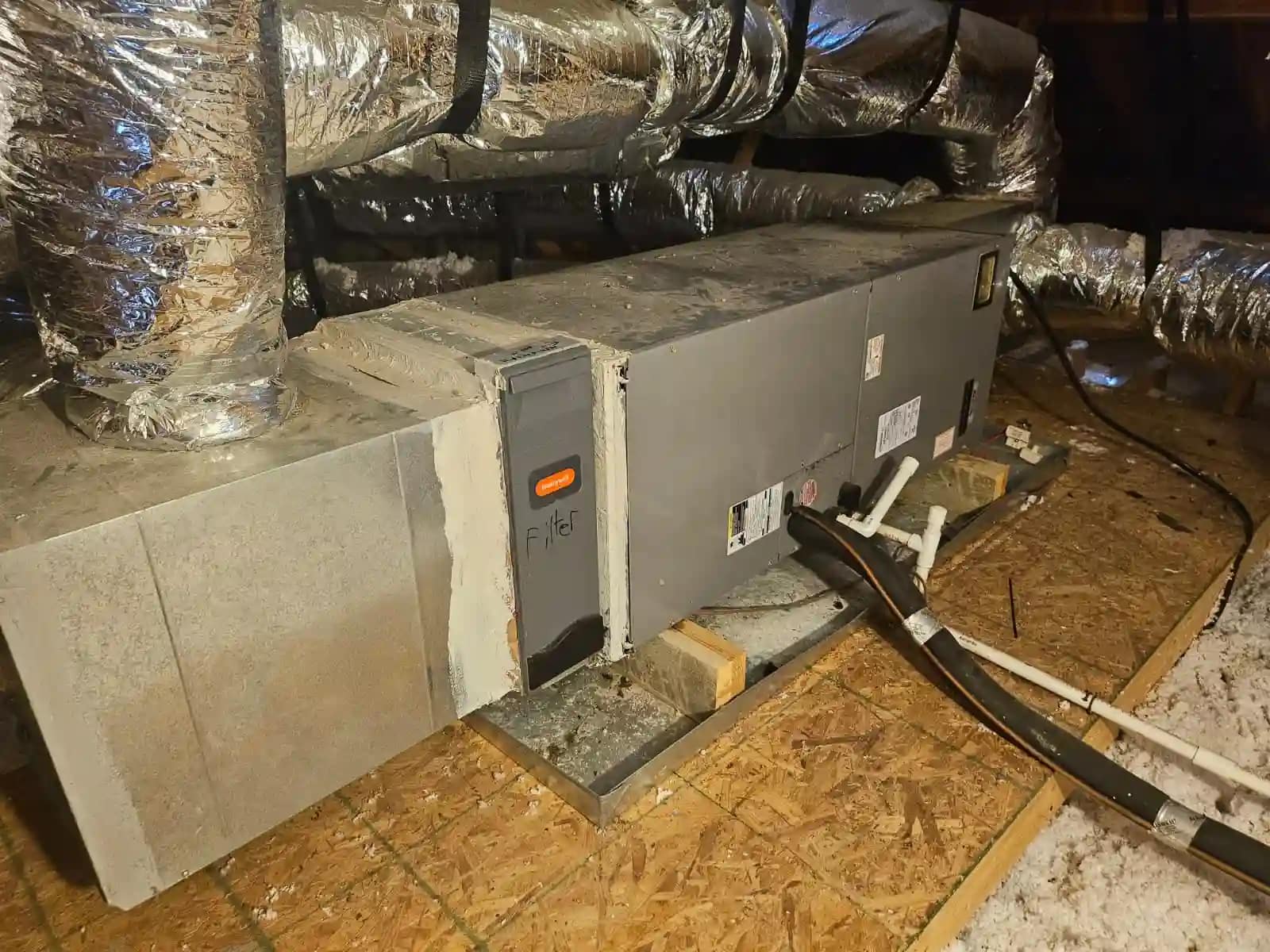
If there is no gas smell, smoke, or electrical odor, turn the system off and let it cool. Replace only a user-accessible filter, following the size and airflow arrow on its frame or manual. Do not climb onto unsafe attic framing or remove a sealed panel. See 24SevenAC’s Heating Maintenance information for its published maintenance scope; follow your equipment manual for filter timing.
Could the Blower Motor or Wiring Be Overheating?
Motor, capacitor, or control issue
The blower moves air through the ducts. A motor that overheats, struggles against restricted airflow, or develops a fault may produce a hot, plastic, varnish-like, or electrical smell. A failing capacitor, relay, control board, or connector can also heat up. The smell does not reveal which part failed. Carrier lists an overheated blower motor and damaged wiring among possible sources of burning-plastic or electrical odors.
A technician can evaluate the motor, airflow, connections, controls, and safety devices. Homeowners should not remove a blower assembly or test a capacitor; some components can retain a dangerous charge after power is off.
Wiring may be outside the furnace
A fishy or hot-plastic smell may originate in house wiring or another appliance. If it is strongest near an outlet or panel, a breaker repeatedly trips, or a switch is warm or discolored, keep clear and call an electrician . If the smell comes from the heater, arrange HVAC service. 24SevenAC says its heating repair process can include electrical/control diagnostics and blower/airflow evaluation . If it also blows cold air, see its Furnace Blowing Cold Air guide. Cold air does not make a burning smell safe to ignore.
What Homeowners Can Check Safely
Limit checks to visible, accessible items that require no tools. Stop if you smell gas, see smoke, hear arcing, or feel heat from the equipment or wiring. Never reset a breaker repeatedly; if it trips again, leave it off and call a professional.
| Check | Safe approach | Stop and call for help if… |
| Thermostat | From a safe place, note its mode and temperature; stop the heater if safe. | Gas odor, smoke, flames, CO alarm, or hot control |
| Filter | With system off and cool, inspect only a user-accessible filter. | Unsafe attic access, sealed panel, or electrical odor |
| Room and vents | Note affected room; look for visible debris without reaching inside. | Object is hot, smoldering, or smell grows |
| Alarms | Check smoke/CO alarms per their manuals. | Any alarm sounds: leave and call 911 |
| Technician notes | Record odor, start time, recent service, sounds, affected rooms. | Do not delay evacuation to collect details |
Note the equipment type only if visible. Never restart it to reproduce the smell, open electrical covers, access a burner, test gas with a flame, or walk across unsupported attic framing.
When to Call 911, the Gas Company, or an HVAC Technician
| Situation | Who to call | First action |
| Rotten-egg/sulfur odor or suspected gas leak | 911 and gas utility | Leave; avoid switches and phones inside; call from safety |
| Smoke, flames, sparks, active electrical fire, or rapidly growing odor | 911 / fire department | Evacuate; do not approach equipment or panel |
| CO alarm or possible CO symptoms | 911 / emergency medical services | Get everyone to fresh air; do not re-enter |
| Persistent plastic, rubber, oily, or electrical odor, no immediate emergency | HVAC technician; electrician if wiring/panel suspected | Stop equipment if safe; keep it off pending advice |
| Brief, mild first-use dust smell that fades | Monitor; call if it persists or returns | Check accessible filter after shutdown and cooling |
For a gas odor, the utility and emergency responders come before an HVAC company. Houston-area residents can use the City’s instructions for contacting CenterPoint; elsewhere, call the gas utility serving the property . Call 911 for smoke, fire, sparks, a strong gas smell, CO alarm, illness, or immediate danger. If house wiring appears to be the source, call an electrician. If unsure, move away and ask emergency dispatch for guidance.
Texas-Specific Causes: Dust, Heat Pumps, and Attic Furnaces
Texas homes differ in humidity, dust, pollen, pets, equipment, and how long the heater sits idle. The examples below are things to mention to a technician, not city-specific failure statistics or a diagnosis by ZIP code.
Houston and Katy: humidity and seasonal startup
After months of cooling, a dusty smell may appear at first heating startup. A persistent musty odor is different and may indicate moisture near a drain, coil, duct, or elsewhere. EPA notes that musty odor can signal hidden mold; if HVAC contamination is suspected, stop using the system and arrange professional assessment.
Do not disturb suspected mold or climb into an unsafe attic. 24SevenAC lists Houston, Katy, and nearby communities for heating repair.
Dallas–Fort Worth: attic equipment and seasonal dust
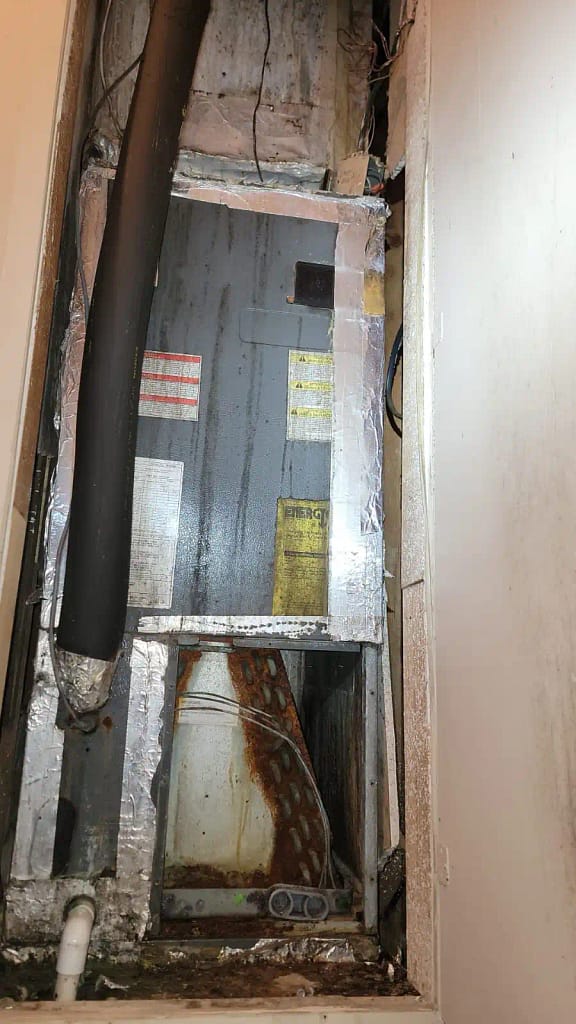
Some DFW homes have attic equipment, though it is not universal. Lennox highlights safe access, ventilation, insulation, and serviceability as important for attic furnaces . Do not walk across unsupported framing to reach a filter. A mild startup dust odor may fade; plastic, electrical, sulfur, smoke, or worsening odors need prompt attention.
Austin, Round Rock, San Antonio, and West Texas
Pollen may enter Austin and Round Rock homes; dust and a long idle period are useful context in San Antonio, Odessa, and drier areas. These are household factors, not proof of the odor’s cause. A heat pump may briefly deliver cooler air during defrost, but that does not explain a burning-plastic or electrical smell. Carrier recommends professional diagnosis for persistent cold air or heavy outdoor-coil ice . See 24SevenAC’s How Long Do Heat Pumps Last guide for lifespan context, not odor diagnosis.
How a Professional Diagnoses a Burning Heater Smell
Confirm the source and review symptoms
Tell the technician when the smell started, where it is strongest, whether the heater was idle or recently serviced, and whether alarms, unusual sounds, or performance changes occurred. Mention gas, smoke, or a CO alarm first.
Inspect components and document findings
The inspection may cover:
- Filter and airflow; blower motor and wiring.
- Thermostat, controls, and safety devices.
- Burner, heat exchanger, flue, and combustion safety on a furnace.
- Compressor, reversing valve, defrost, and auxiliary heat on a heat pump.
- Findings documented with notes or photos; photos do not replace electrical or combustion tests.
Ask whether the system is safe to run and request a written estimate before non-emergency repairs. If house wiring is the source, call an electrician. For Houston or Katy, see 24SevenAC’s Furnace Repair page and confirm coverage.
2026 Furnace Inspection and Repair Costs in Texas
There is no official Texas furnace-repair price. Fees vary by city, equipment, access, parts, timing, labor, and diagnosis. North Texas sources list diagnostic visits at $75–$150, blower motors at $300–$900 or $400–$900, and control boards at $750–$1,200 . Angi lists $100–$250 for an initial service call . These are market references, not quotes.
Use these figures for rough budgeting only. They are not a statewide average or a 24SevenAC quote. Confirm current fees and get a written estimate after inspection.
| Service or repair | Illustrative 2026 range | Qualification |
| Diagnostic / service visit | $75–$250 | Local reference $75–$150; national $100–$250 . |
| Furnace or HVAC tune-up | $100–$300 | 24SevenAC lists $149–$299 for a one-time tune-up; verify heating scope . |
| Minor electrical component repair | $150–$600 | Broad estimate; diagnosis, parts, and wiring change the price. |
| Blower motor | $400–$1,200 | Local ranges vary by motor and equipment . |
| Control board | $300–$1,200 | North Texas guide $750–$1,200; 24SevenAC related guide $600–$1,100 . |
| Heat exchanger | Quote after inspection | Model, condition, and safety implications matter. |
| Gas-line / gas-valve work | Quote after safety clearance | Never test or repair a leak yourself. |
| After-hours visit | Varies | Ask about fees only after everyone is safe. |
Ask whether the quote includes parts, labor, diagnostic fees, testing, permits, and warranty. 24SevenAC’s Texas HVAC repair cost guide and heating page publish estimates, which may not apply to your furnace or current offer. Confirm prices before booking.
How to Prevent Burning Odors Before Winter
Service and filters
A pre-season visit can uncover airflow restrictions, worn parts, venting concerns, or electrical issues. The CDC recommends annual qualified service and proper venting for fuel-burning systems . Ask for findings in writing; routine service does not replace urgent action for gas or electrical odors.
Check filters as directed by the equipment maker; pets, renovation dust, or heavy use may mean more frequent checks. Keep combustibles away from the heater and leave supply and return vents clear.
Alarms and access
Test smoke and CO alarms according to their manuals, with CO alarms near sleeping areas . Keep attic equipment accessible to professionals; never walk on unsupported framing . Record filter changes, repairs, and recurring odors to help identify dust, moisture, or a fault.
If the heater also stops warming the home, address the odor risk first, then consult 24SevenAC’s Furnace Blowing Cold Air guide. Maintenance cannot guarantee unusual odors will never occur, so use the safety steps whenever one appears.
Book a Safe Furnace Inspection With 24sevenac
If there is no emergency and the odor appears to come from the heater, arrange an inspection instead of running it to test the smell. 24SevenAC lists service in Houston, Katy, and nearby communities . Check coverage online or call (713) 832-5545. For gas, leave and call 911 and the utility.
FAQ: Heater Smells Like It’s Burning
Is it safe to stay in a house with a burning smell?
A faint dusty startup smell that fades may be temporary. Leave for gas, smoke, flames, sparks, a CO alarm, or possible CO symptoms. Stop a persistent electrical or plastic odor if safe and call a professional. If uncertain, move away.
Is there a smell before an electrical fire?
A burning odor, flickering lights, warm outlets, or discolored switches can signal an electrical problem . Avoid the panel. Evacuate and call 911 for smoke, sparks, or flames; otherwise call an electrician or HVAC technician.
Why does my house smell like burning, even though nothing is burning?
Dust warming at seasonal startup is one possibility. Others include an overheating motor or wire, another appliance, or debris near heat. No visible flame does not prove safety. Note where it is strongest, stop equipment if safe, and seek help if it worsens or seems electrical or gas-like.
Does carbon monoxide smell like burnt plastic?
No. CO is odorless, so smell cannot detect it. If an alarm sounds or anyone has possible symptoms, go outside and call 911.
What if my heater smell musty?
Musty odor may relate to moisture, but cannot confirm mold. EPA says it can indicate hidden mold and advises against running HVAC suspected to be contaminated . Have the source assessed rather than masking the smell.